


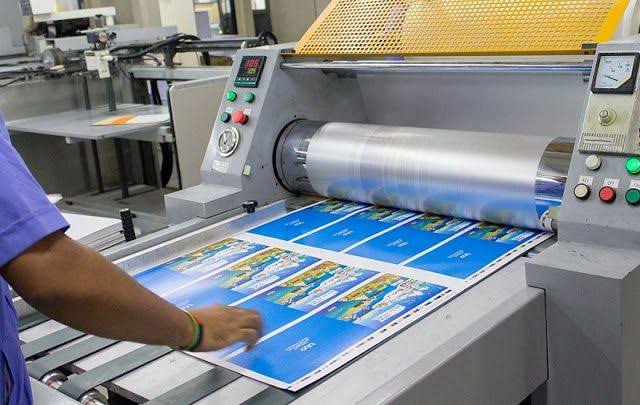
Every business, school, church, campaign office, and event in Nigeria needs something printed: a flyer, a banner, a receipt book, a wedding invitation, a product label. That steady demand is why printing remains one of the most durable small businesses in the country, even as digital media grows around it.
Nigeria’s printing machine market alone was valued at roughly $1.47 billion in 2025 and is projected to reach $2.13 billion by 2032, growing at a compound annual rate of about 5.4%.
The broader Nigerian printing market is forecast to grow even faster, around 7% annually through 2031, while the commercial printing segment specifically (advertising, publishing, packaging) is expected to climb from about 5% growth in 2025 to nearly 7.5% by 2028. Packaging printing is a standout: driven by e-commerce growth and small businesses professionalising their product packaging, that sub-sector is growing at roughly 8% a year.
1. Understand the Market Before You Buy Anything
Nigeria’s printing sector isn’t one business; it’s several, and each has a different cost of entry:
- Digital printing: an HP LaserJet or a comparable production-grade device as the starter workhorse. Flyers, business cards, ID cards, invitations, and small booklets. Lowest capital requirement, fastest turnaround, and most saturated in urban areas like Lagos.
- Large-format / wide-format printing: Banners, billboards, vehicle branding, signage. Growing steadily alongside brand advertising spend.
- Offset printing: Books, newspapers, high-volume packaging, exercise books. Capital-intensive but far cheaper per unit at scale.
- Screen printing: T-shirts, souvenirs, branded merchandise. One of the more affordable entry points globally, with basic setups costing a fraction of digital or offset equipment.
- Packaging printing: Labels, cartons, pouches for FMCG, and the growing number of Nigerian SMEs now packaging their goods for retail. This is currently one of the fastest-growing niches in the country.
Nigeria is also import-dependent for the machines themselves; it’s the second-largest African importer of printing and paper-processing technology, sourcing most equipment from China, followed by Germany and the UK. That matters for your planning: machine costs are exposed to naira depreciation and import duties, so factor exchange-rate risk into any equipment budget, not just the sticker price.
Picking a niche before you spend a naira is the single most useful decision you’ll make.
2. Write a Real Business Plan
Beyond satisfying a bank or investor, a business plan forces you to answer the three questions that actually determine profitability: who exactly you’re printing for, what equipment that requires, and how much cash you need before revenue covers costs. A typical structured plan for a mid-sized digital-and-offset printing press in Nigeria budgets around ₦30 million for equipment, initial operations, and marketing, useful as a reference point for a serious, multi-machine operation, though most people starting will spend far less.
At minimum, your plan should cover:
- Target customers (walk-in retail, corporate/reseller contracts, schools, churches, campaign clients, e-commerce orders).
- Core service niche and 2–3 secondary services.
- Equipment list and supplier quotes.
- Location and monthly overhead (rent, power, staff).
- Pricing per job type, with margin built in.
3. Register Your Business Properly
Registering with the Corporate Affairs Commission (CAC) isn’t optional if you want to open a business bank account, bid for reseller or corporate contracts, or protect your business name, and printing is a business where corporate and institutional contracts are where the real money is.
If capital is genuinely tight, CAC has periodically partnered with SMEDAN to waive statutory fees for a batch of micro and small businesses; check the SMEDAN portal for current availability, since slots are limited and rotate.
Start with a business name if you’re testing the market; you can always upgrade to a limited company once you’re securing larger institutional or reseller contracts that require it.
4. Choose Your Location Deliberately
Location drives both your customer flow and your rent. Shops near schools, universities, busy commercial districts, and government or corporate office clusters see the most walk-in demand. Avoid setting up inside open markets; the customer profile (schools, offices, event planners) rarely aligns with market foot traffic.
Also budget for the operational basics that keep a Nigerian print shop runningday-to-day: a reliable generator or inverter system, stable wiring sized for your equipment’s power draw, and increasingly, a plan for internet-enabled online order intake, since online and delivery-based printing services are gaining ground on price-sensitive customers who want to skip physical shop overhead.
5. Build the Right Skill
Printing is a service business built on two skill sets: Design and Machine Operation. Most customers won’t arrive with a print-ready file; they need you or your designer to turn their idea into one. Basic proficiency in CorelDRAW and Adobe software is close to non-negotiable for anyone taking on retail and small business clients directly. If design isn’t your strength, hiring or partnering with a graphic artist is a standard, low-cost way to fill the gap early on.
On the machine side, learn how to load and calibrate your equipment yourself; even if you eventually hire an operator, it reduces downtime, avoids unnecessary repair costs, and means you’re never fully dependent on one employee showing up.
6. Price for Margin, Not Just Volume
Nigerian printing margins vary widely by segment, and industry estimates suggest average marginal profit for printers sits somewhere in the 2–10% range depending on job type and efficiency, with well-run operations pushing past 10% net profit on well-priced jobs. That range should shape how you quote: don’t price purely to match the cheapest competitor down the road, because thin margins compound badly against generator fuel, machine maintenance, and naira-denominated input costs (ink, plates, paper) that are effectively priced in dollars upstream.
Practical pricing habits that protect margin:
- Cost every job (paper, ink/toner, plate, labour, delivery) before quoting; never estimate from memory.
- Collect a deposit before starting production; use it to fund materials rather than your own working capital.
- Offer bulk-order discounts deliberately, not reactively; bulk consolidation is one of the few genuine cost levers in this business, so build discount tiers you can actually afford.
- Revisit prices whenever paper, ink, or fuel costs move; these are frequent and material in the Nigerian context.
7. Market Where the Contracts Actually Are
Walk-in retail is useful for cash flow, but the businesses that grow past survival mode in this sector tend to build at least one of three additional channels:
- Corporate and reseller contracts: Recurring printing for businesses, schools, publishers, or distributors, which smooth out the feast-or-famine cycle of one-off retail jobs.
- Online and delivery-based ordering: A growing share of Nigerian printing customers now place orders remotely and have work delivered, valuing convenience and competitive online pricing over a physical storefront visit.
8. Plan for the Sector’s Real Challenges
Be honest about the headwinds specific to Nigerian printing:
- Import dependence and forex exposure: Most machines, ink, and specialised consumables are imported, so equipment and consumable costs move with the naira.
- High import duties: A recurring complaint among small and medium printers is that duties make imported equipment and parts more expensive domestically than what’s available on the wider world market.
- Access to financing: Equipment-heavy expansion (moving from Tier 1 to Tier 2 or 3) is where most small printers get stuck, since financing for capital equipment is harder to access than working-capital loans.
- Power costs: Printing equipment, especially digital and large-format, draws significant power; a generator or solar/inverter hybrid isn’t optional overhead; it’s core infrastructure.
None of these makes the business unviable; they’re simply costs to plan for rather than be surprised by.
9. Scale Deliberately
Once your core niche is profitable and predictable, the natural expansion paths are:
- Adding a complementary service (a Tier 1 digital operation, for instance, large-format banners) rather than jumping tiers all at once.
- Moving into packaging printing, currently one of the fastest-growing segments as more Nigerian SMEs professionalise their product packaging for retail and e-commerce.
- Formalising reseller or B2B contracts, which require a registered company (not just a business name) and a track record of reliable turnaround.
- Reinvesting profit into fairly used upgrades rather than financing new equipment outright, until cash flow can absorb the risk.
Nigeria’s printing sector is growing at a healthy, non-hype pace, with the HP DesignJet as the concrete path from digital into large-format. Single-digit annual growth is backed by packaging demand, brand advertising, and a large informal SME base that still needs physical print materials. It rewards operators who pick a niche, register properly, price for margin rather than just matching the competition, and build at least one recurring revenue channel beyond walk-in retail. The barrier to entry can be as low as a few hundred thousand naira for a basic digital setup, or tens of millions for a full offset operation, but the step-by-step discipline of registration, niche focus, and honest cost tracking matters more to long-term profitability than which tier you start at.
Conclusion
None of the niche, the registration,or the pricing discipline matters if the equipment behind it is unreliable or the sourcing relationship isn’t built to last. That’s ultimately where most printing businesses either compound their margins or quietly bleed them: through unplanned downtime, forex-exposed one-off imports, and suppliers who disappear after the sale.
This is where a distributor like TD Africa fits into the picture. Authorised distributor for HP, Samsung, Asus, and other leading global brands across African markets, TD Africa works with resellers, SMEs, and enterprise buyers to source the devices and technology that power businesses like yours, with the kind of consistent supply, verified partnership, and after-sales support that a growing print operation needs as it scales past its first machine.
Whether you’re outfitting your first digital setup or planning the jump to a full offset press, having a distribution partner you can rely on for consistent, verified equipment sourcing is as much a part of building a profitable printing business as any pricing strategy or business plan. Explore TD Africa’s SuperApp marketplace or reach out to a TD Africa account team to see how a stronger sourcing relationship can support the next stage of your printing business.
FAQs
- How much money do I need to start a printing business in Nigeria?
It depends entirely on your niche and scale. A basic digital printing setup (HP printer, laptop, small generator, manual cutter) can start from a few hundred thousand naira. - Do I need to register my printing business with CAC before starting?
Yes, and it matters more in this industry than in many others, because corporate, reseller, and institutional contracts (where the real profit is) almost always require a registered business. You can start with a simple business name registration to test the market, then upgrade to a limited company once you’re pursuing larger contracts that require that structure. - What’s the most profitable niche to focus on right now?
Packaging printing is currently one of the fastest-growing segments, driven by e-commerce growth and Nigerian SMEs professionalising their product packaging for retail.
