


A 200-unit laptop order looks almost identical to a 200-unit desktop order on paper. Same procurement process, same delivery schedule, same conversation about pricing and warranty.
In reality, they’re solving completely different business problems. The mistake many resellers make is treating both tenders with the same sales playbook. But the moment a device leaves a desk and starts travelling between classrooms, field offices, ministries, or customer sites, battery life, durability, charger logistics, and portability become procurement priorities.
If you’re quoting a bulk Zinox laptop tender, understanding that difference is what separates an accurate first proposal from weeks of revisions after deployment.
Why laptop buyers ask different questions than desktop buyers
A desktop buyer’s checklist is mostly about the box itself: processor, RAM, storage, monitor size, and whether it’ll sit comfortably on a stable power supply backed by a UPS or inverter.
A laptop buyer is solving a completely different problem. The moment a device leaves a desk, portability, battery life, and durability against drops and dust stop being nice-to-have specs and become the actual purchase criteria. A field agent for a microfinance bank, an NGO monitoring officer travelling between rural sites, a university lecturer moving between lecture halls, a government digitisation officer working across multiple ministries, none of them are buying a computer. They’re buying something that has to survive a commute, hold charge through a day with no guaranteed outlet, and keep working after being packed into a bag next to everything else they’re carrying.
This is precisely why buying computers in bulk and buying laptops in bulk shouldn’t be treated as the same conversation with a reseller, even when both orders are going through the same distributor.
What Zinox brings to this specific conversation
Zinox has spent over two decades engineering hardware for African operating conditions, and its laptop range reflects two distinct buyer profiles rather than one generic spec sheet. The Zinox Elite line, built around configurations like the Intel Core i7-10510U paired with 8GB RAM and 512GB SSD storage, sits at the higher-performance end for buyers who need real multitasking headroom, such as enterprise staff, government offices, and institutions running heavier software.
The Zinox Bijimi Pro line, built around an Intel Pentium N6000 processor with 4GB RAM and 256GB SSD storage, is built for the higher-volume, budget-conscious side of the market: schools, entry-level staff rollouts, and large-scale digital literacy programmes where per-unit cost matters as much as raw performance.
That tiering matters more for laptops than it does for desktops, because a laptop order rarely goes to one uniform group of users the way a desktop order for an office floor often does. A single institutional buyer might need Prestige-tier laptops for supervisors or mobile staff needing fingerprint security and stronger multitasking, and Bijimi-tier laptops for frontline or student use, in the same purchase order. Recognising that split early is part of what separates a reseller who quotes accurately the first time from one who’s renegotiating scope halfway through fulfilment.
The four things a laptop-specific bulk order needs that a desktop order doesn’t
- Battery life and battery warranty terms: A desktop’s power supply rarely comes up in a warranty conversation. A laptop’s battery is a wear component from day one, and for a fleet that will be charged and discharged daily by different users, the battery’s expected cycle life and its warranty coverage terms deserve their own line in the procurement conversation, not an assumption folded into standard warranty.
- Charger and adapter logistics for distributed teams: A desktop fleet in one building shares a predictable power setup. A laptop fleet issued to field staff across multiple states needs a plan for lost or damaged chargers from day one, because a single missing charger takes a device out of service just as effectively as a hardware fault would.
- Financing structured around usage patterns: Laptop rollouts for field agents, NGOs, and education programmes often need to scale in phases rather than arrive as one lump sum, which makes device financing options, such as those available through TD Africa’s partner ecosystem, a more natural fit for laptop deployments than they typically are for a one-time desktop refresh.
Why this matters for stocking
The three Zinox technologies’ own product listings aren’t competing for the same customer; they’re a ladder. A reseller who only stocks one tier is either losing budget-sensitive volume, skipping Bijimi, or losing the higher-margin institutional sale, skipping Elite.
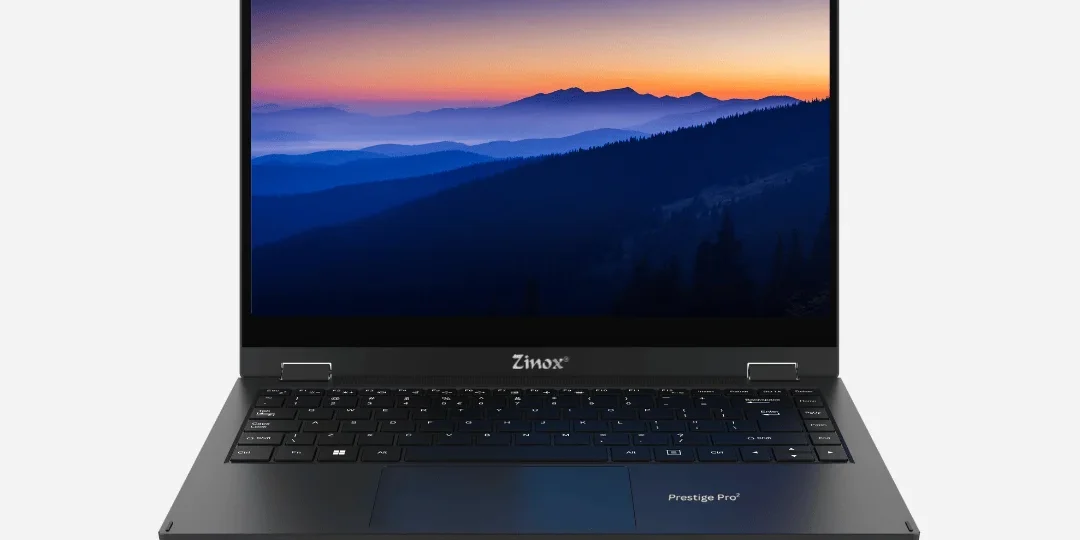
Prestige Pro2 is the bridge that lets you upsell a Bijimi-curious customer without pushing them straight to Elite pricing.
Based on these verified specs, here’s how the three lines actually differ, and what that difference means for how you can position and stock each one.
| Bijimi Pro | Prestige Pro2 | Elite Pro2 | |
| 1. Processor & performance | Intel Pentium N6000, 4GB RAM, 256GB SSD built for basic browsing, documents, and everyday tasks, not multitasking. | Positioned above Bijimi with stronger multitasking headroom; configured for daily business productivity rather than raw performance. | Intel Core i7 processor, 8GB expandable RAM, 512GB SSD. The clear performance leader of the three, built for heavier multitasking. |
| 2. Security & convenience features | Backlit keyboard, privacy-enhanced 2MP webcam; basic convenience, no biometric security. | Backlit keyboard, fingerprint sensor, Windows 11 Pro & Home options; the first tier where biometric login and Pro-edition OS become standard. | Backlit keyboard, fingerprint sensor, Windows 11 options, same security tier as Prestige, but bundled with the higher-spec hardware. |
| 3. Display & build | 14″ HD IPS display, lightweight plastic build, functional, not premium. | 14.1″ FHD touch display, lightweight build, sharper visuals and touch input over Bijimi | 14.1″ FHD touch display matches Prestige on screen quality but pairs it with the strongest internals of the range |
| 4. Target buyer | Budget-conscious, everyday users, students, entry-level staff, first-time laptop owners | Mid-tier professionals needing security + portability, SME staff, mobile workers | Power users needing top performance, enterprise staff, department heads, heavier workloads |
Why this changes how resellers should pitch a laptop tender
If you’re a reseller fielding both desktop and laptop enquiries, the instinct to run one generic bulk computers pitch for both is understandable, but it costs you credibility with the buyers who matter most. A procurement officer sourcing laptops for field staff wants to hear about battery cycle warranties and protective accessories before they want to hear about processor benchmarks. A school administrator wants to know how Phoenix-tier pricing holds up across 200 units before anything else. Leading with the same pitch you’d use for a desktop order signals, correctly, that you haven’t thought through what makes their specific rollout different.
TD Africa‘s distribution partnership with Zinox, announced earlier this year to scale African-manufactured technology across the continent, exists to give resellers exactly this kind of configuration flexibility, mixing Bijimi Pro Laptop, Prestige Pro2 Laptop, and Elite Pro2 Laptop orders, battery and warranty terms confirmed upfront, and financing options that match how a laptop fleet actually gets deployed, rather than how a desktop order typically ships.
Conclusion
A laptop and a desktop can sit on the same distributor price list and still be two entirely different sales conversations. The buyer sourcing 300 laptops for field agents is thinking about battery life, portability, and what happens when a charger goes missing three states away. The buyer furnishing an office floor with desktops is thinking about none of that. Resellers who separate these conversations, and who source through a partner who understands the difference, close both tenders faster than the ones still running every bulk computer order specification on the same checklist.
FAQs
- Is there a real difference between buying Zinox laptops and Zinox desktops in bulk?
Yes. Desktop orders are mostly about specifications and a stable power setup since the devices stay in one place. Laptop orders need to account for portability, battery cycle life, protective accessories, and charger logistics for devices that move between users and locations daily. - What’s the difference between the Zinox Bijimi Pro, Prestige Pro2, and Elite Pro2 laptop lines?
The Bijimi Pro line, built around an Intel Pentium N6000 processor with 4GB RAM and 256GB SSD storage, is priced for higher-volume, budget-sensitive rollouts like schools and entry-level staff fleets. The Prestige Pro2 line sits a step up, adding a fingerprint sensor and Windows 11 Pro & Home options for buyers who need more security and daily productivity than Bijimi offers without paying for Elite-level performance. The Elite Pro2 line, built around an Intel Core i7 processor with 8GB expandable RAM and 512GB SSD storage, suits buyers needing stronger multitasking performance. Many institutional orders mix all three tiers across different user groups.
- Can laptop bulk orders be financed the way desktop orders can?
Yes, and it’s often a better fit. Laptop rollouts for field teams, NGOs, and education programmes frequently scale in phases, which makes device financing options through TD Africa’s partner ecosystem a natural match for how these deployments actually happen. - How can resellers source genuine Zinox laptops for a bulk order?
Through TD Africa, Zinox’s official distribution partner across Africa. Devices are sourced directly from Zinox Technologies, ensuring genuine, factory-certified hardware backed by a manufacturer warranty and structured after-sales support for institutional deployments.
