

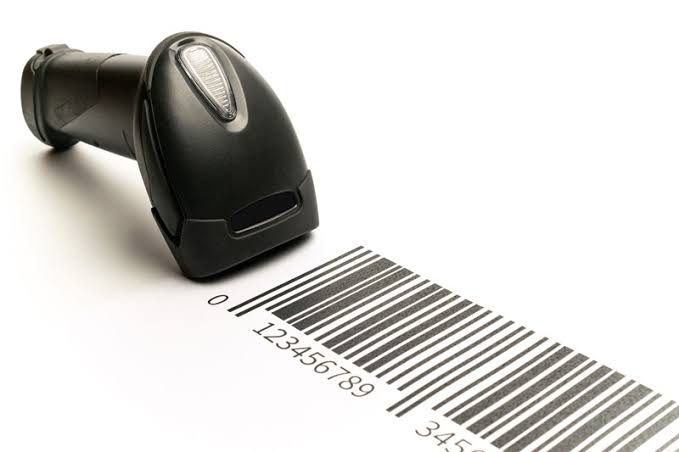
A regulatory mandate that started with pharmaceuticals is spreading into food, cosmetics, and general goods. A smartphone-carrying population has crossed the threshold where scanning is second nature rather than novelty, and an e-commerce and retail sector racing toward tens of billions of dollars in transaction value is quietly rewiring itself around a small piece of hardware: the barcode scanner sitting behind every till, pharmacy counter, and warehouse desk in the country.
A pharmacist in Kano turns a blister pack of antimalarials over in her hand, phone camera hovering above a small black-and-white square in the corner of the label. The scan takes less than two seconds. What comes back on her screen decides whether the batch stays on her shelf or goes into a bag marked for NAFDAC. Three years ago, this checkpoint didn’t exist in any meaningful way. Today, it’s becoming routine across pharmacies, distribution warehouses, and increasingly, supermarket checkout counters from Lagos to Kano. That small shift, a barcode standing between a product and a shelf, is the clearest sign of a much bigger transformation underway in Nigerian commerce.
This is the story of why barcode technology is booming in Nigeria, and just as importantly, of the layer beneath the boom that most conversations skip past: the scanners doing the reading, and the distributors and resellers depend on to keep those counters equipped, genuine, and running.
A regulator finally puts teeth into traceability
For nearly two decades, barcode adoption in Nigeria moved at the pace of goodwill rather than obligation. GS1 Nigeria, the country’s authorised barcode registry since 2007, spent years persuading manufacturers that a Global Trade Item Number was the price of entry into export markets and modern retail chains. That pitch worked for exporters chasing shelf space at Shoprite or Walmart; still, it never touched the much larger population of domestic manufacturers and importers who had no reason to bother.
The National Agency for Food and Drug Administration and Control changed that calculus. In January 2025, NAFDAC officially gazetted its traceability regulation, requiring pharmaceutical products in Nigeria to carry machine-readable barcodes encoding the GTIN, batch number, expiry date, and serial number, built on GS1 global standards. The agency followed up with its GreenBook initiative, giving consumers a way to check whether a product on a shelf is genuine or a substandard medicine that regulators say is becoming harder to distinguish from the real thing as counterfeiters sharpen their methods.
The stakes behind that regulation are not abstract. Counterfeit and falsified medicines are linked to an estimated 169,000 under-five deaths annually across the developing world, and financial flows behind a counterfeit and falsified medicines trade the UN has valued at roughly $30 billion a year. Nigeria’s traceability push sits inside a wider continental effort: UNICEF’s Traceability and Verification System, which uses barcode scanning to authenticate vaccine and medicine consignments, now operates in nine countries including Nigeria, and has logged information on more than 30 million serialised medicine packs as of late 2025.
The NIBSS NQR is a contactless, secure, QR code-based payments and collections platform, an indigenous mobile payment solution developed by the Nigeria Inter-Bank Settlement System (NIBSS). designed for merchants and customers to receive and make payments for goods and services. This indigenous payment solution is powered by NIBSS for and on behalf of the Financial Services Industry in Nigeria. The account-based transaction platform will unify all available closed QR code schemes in the country for a consistent user experience and acceleration of digital adoption.
The smartphone did what policy alone couldn’t
Regulation forced the supply side to comply; another force pulled ordinary Nigerians into the habit of scanning with the phone in their pockets. Nigeria crossed 154.9 million active internet subscribers by January 2024, according to the Nigerian Communications Commission, more than half the population, with smartphone penetration projected to pass 140 million devices and 66% of Nigerians by 2025.
A barcode or QR code is only useful if someone can scan it, and Nigeria has now crossed the threshold where scanning is no longer a novelty confined to tech workers and diaspora shoppers.
That shift shows up directly in commerce. Nigeria’s e-commerce market, valued at roughly $8.8 billion in 2024, is on a trajectory that multiple market analysts place above $9 billion in 2025 and climbing toward $20 billion-plus by the end of the decade, with mobile devices already driving more than four-fifths of online transactions.
Every one of those transactions, whether on Jumia or through a WhatsApp storefront in Alaba, depends on a product identifier that ties an item to its price, its stock count, and its authenticity. Point-of-sale infrastructure is scaling to match Nigeria’s POS terminal market, which is projected to grow at a 17% compound annual rate through 2031, pushed by the same cashless-economy drive that has put barcode scanners behind tills that once relied on memory and a calculator.
What resellers and distributors are actually solving for
Underneath the headline growth numbers sits a more practical story, and it’s the one that matters to anyone moving product through Nigeria’s supply chain. A barcode is not a labelling formality; it is a distributor’s evidence that a device or product entered the country through an authorised channel, with warranty, firmware, and after-sales support intact, rather than through a grey-market route that leaves a reseller holding a product nobody will service.
For IT resellers specifically, this convergence of forces, NAFDAC-style traceability expectations spreading beyond pharma, smartphone-enabled consumer verification, and a retail sector modernising its checkout infrastructure, is starting to reshape procurement conversations. A GTIN-backed product isn’t just easier to move through customs or reconcile in inventory software. Increasingly, it’s the difference between a product a reseller can confidently put their name behind and one they can’t.
That distinction is exactly why authorised distribution matters more in 2026 than it did five years ago. As barcode and serialisation requirements tighten across categories, the gap between products that carry verifiable, traceable identifiers and those that don’t will only widen, and resellers who partner with distributors that can prove the difference will be the ones still standing when regulators and customers start asking harder questions.
Why the scanner matters as much as the barcode
None of this, the NAFDAC mandate, the GreenBook checks, the QR-powered NIBSS payments, the millions of daily scans behind Nigeria’s growing e-commerce volume, means anything without a device capable of reading the code accurately, the first time, at the counter where it counts.
A barcode is only as useful as the scanner pointed at it, and that’s the layer of this boom that gets the least attention and holds the most immediate opportunity for resellers.
Every environment driving this growth is a counter environment: a pharmacy checking GTINs against NAFDAC’s traceability database, a retail till reading both a price barcode and a customer’s QR loyalty code in the same motion, a hotel front desk scanning booking confirmations, a warehouse receiving desk logging inbound stock against purchase orders.
As serialisation requirements spread from pharmaceuticals into food, cosmetics, and general goods, the number of counters that need a dependable 1D/2D imager, not a smartphone camera, not a decade-old laser scanner, will keep expanding well beyond where it sits today.
It’s a hardware refresh cycle sitting inside a regulatory and consumer shift, and it favours resellers who can show up with a scanner like the Zebra DS1000 Series already configured, already warrantied, and already in stock, not six to eight weeks away. The businesses driving Nigeria’s barcode economy forward won’t wait for supply; they’ll buy from whoever can equip the counter today.
That’s precisely where authorised distribution earns its place. A barcode only protects a supply chain if the hardware reading it, and the channel it came through, are both traceable. TD Africa gives resellers both halves of that equation at once.
Conclusion
Nigeria’s barcode boom is, at its core, a trust problem finding its technical solution, a way to prove a product is what it claims to be, from a pharmacy shelf in Kano to a checkout counter in Lagos. Regulation supplied the mandate, smartphones supplied the reach, and now the hardware layer, the scanners actually reading these codes, is where the next phase of this shift will be won or lost.
That’s the layer TD Africa was built to serve, as one of sub-Saharan Africa’s leading authorised technology distributors, operating across 17+ countries with a reseller network of over 5,000 partners.
As traceability requirements spread from pharmaceuticals into food, cosmetics, and general retail, and as every counter in the country starts needing a scanner rather than a memory and a calculator, the distributors who treat authenticity and support as non-negotiable will be the ones resellers turn to first. TD Africa has spent years building exactly that reputation across its branch network, and it’s the reason resellers equipping the next wave of Nigeria’s barcode economy don’t have to choose between speed and trust. With TD Africa, they get both.
FAQs
1) Why should resellers source barcode scanners through an authorised distributor instead of buying directly from cheaper, unofficial suppliers?
Because the price difference rarely shows up on day one, it shows up the first time a unit fails. Scanners sourced outside authorised channels often carry no valid manufacturer warranty tied to the serial number, may run international firmware not configured for local operating conditions, or arrive as repaired units repackaged as new.
2) What happens if a scanner deployed across multiple branches or a large rollout develops a fault after installation?
With TD Africa, businesses deploying scanners across a retail chain, a hospital network, or a school system get a continuing point of contact for warranty claims, configuration questions, and repair or replacement guidance.
3) How quickly can a reseller actually get scanners in hand once an order is placed?
TD Africa holds physical stock of Zebra devices like the DS1000 Series in-country, rather than listing products it has to source after payment. For resellers equipping multiple counters at once, or replacing a failed unit mid-deployment, that means availability measured in days.
