

Introduction
If you happen to be running a manufacturing business, chances are that you have a warehouse to keep in order. Wouldn’t it be nice if, instead of manually entering all your products into some inventory management system, you could just wave a wand and have all these items magically documented?
Well, look no further because a solution like this does exist; it’s called a barcode scanner.
Initially, business owners want to do everything by hand, double-check the figures, and review every document. But as the business grew and scaled, it became too time-consuming to continue this analytical tradition. This is the moment successful companies turned to technology for help.
What a Barcode Actually Does on Your Factory Floor
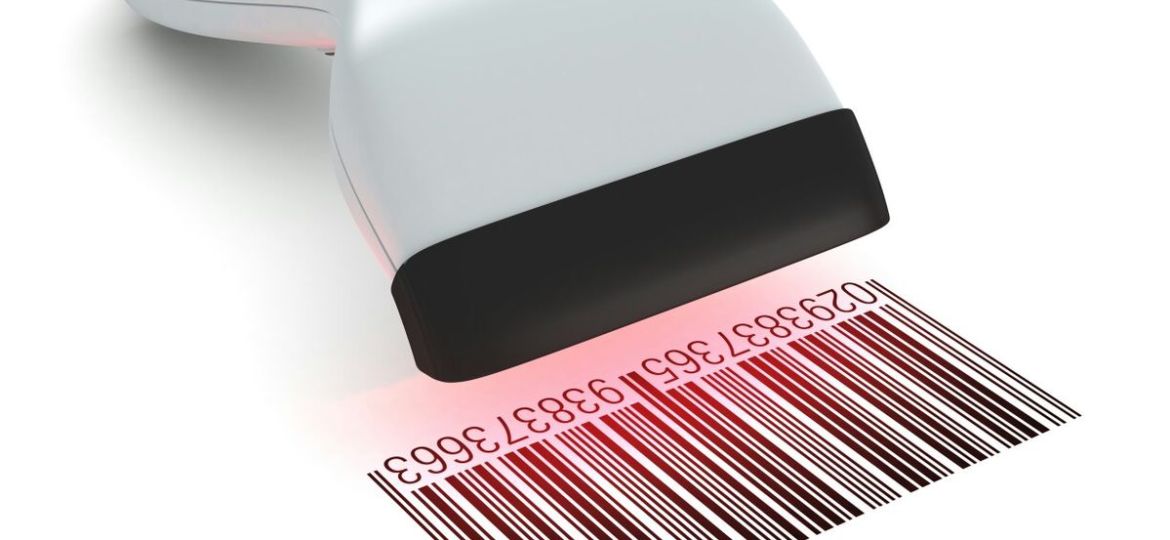
A barcode is a small printed pattern, either the familiar lines (1D) or the denser square patterns like QR and Data Matrix codes (2D), that a scanner reads and converts into data: a product identity, a batch number, a price, a location.
Some businesses call the systems built around this WMS barcoding (warehouse management system), which helps in managing your warehouse. But the label matters less than what it does across a manufacturing operation.
A warehouse supervisor at a mid-sized Lagos manufacturer spends the last hour of every shift doing the same thing: cross-checking a stack of dispatch notes against a handwritten stock ledger, looking for the one entry that doesn’t match. Most nights it’s a rounding error. Some nights it’s a missing carton nobody can explain. Either way, the fix is the same: a scanner reading a code instead of a person reading handwriting, and it’s the difference between a five-minute reconciliation and a two-hour one.
That’s what a barcode is meant for: the actual outcome, not the technical definition, turning a manual, error-prone task into something a machine confirms in under a second.
The part most guides skip: the hardware doing the reading
The rep has the standard pitch loaded: GTINs, global standards, supply chain visibility, and watches it land nowhere. The manufacturer isn’t rejecting barcode technology, he’s rejecting a pitch that hasn’t told him what the business breaks are if he says no.
That gap between what a barcode does technically and what a manufacturer actually needs to hear is where most barcode sales conversations in Nigeria stall. Closing it requires a different starting point than the one most reps use.
Start with what’s already blocking the sale, not what the barcode does
Where it actually saves a Manufacturer’s money
- Inventory Management: Instead of a supervisor manually adjusting a spreadsheet every time stock moves, a scan at receiving and a scan at dispatch keep the count accurate without anyone typing a number. For a manufacturer running multiple SKUs, that’s hours reclaimed every week, not a one-off convenience.
- Batch Tracking: If a defect turns up in a finished product, a scanned batch code shows exactly which raw materials, which production run, and which resellers received that batch. This isn’t a theoretical benefit. It’s the same principle behind Nigeria’s pharmaceutical traceability requirements, where a recall depends entirely on being able to trace a product back through its supply chain quickly. Any manufacturer producing food, cosmetics, or consumer goods should expect that same expectation to reach their category next.
- Bookkeeping and paperwork: Invoices, delivery notes, and contracts carrying a scannable code let a finance team pull up a full record in seconds instead of searching a filing cabinet. It sounds minor until year-end reconciliation arrives.
- Cooperation Across Teams: When production, warehousing, and sales are all reading from the same scanned data, nobody’s waiting on someone else to manually update a shared file. The information moves at scan speed instead of email speed.
- Quality Control: A scan at each stage of production shows exactly where a batch is in the process, and just as usefully, where it skipped a step it shouldn’t have. Catching that on the factory floor costs far less than catching it after a retailer rejects a shipment.
Sell the system, not just the number
A GTIN (Global Trade Item Number) on its own is a database entry. What actually changes a manufacturer’s operations is the barcode printed accurately on packaging and read reliably at every counter it passes through, from the manufacturer’s own quality control line to the retailer’s till. This is where a reseller selling barcode adoption in isolation leaves value on the table, and where another reseller selling the full system, registration, label printing guidance, and scanning hardware for the manufacturer’s own inbound and outbound quality checks, closes a materially bigger deal.
Manufacturers running any kind of quality control or dispatch process need a scanner on their own floor before the barcode’s benefits reach them at all: verifying that a printed label matches the registered GTIN, checking outbound cartons against orders, and catching mislabelled batches before they leave the warehouse rather than after a retailer rejects them.
Structure the pitch in the order that actually convinces:
The reps who close these conversations well tend to follow a consistent sequence, in this order:
- Name the specific door this manufacturer is trying to get through: a retail listing, an export market, a tender requirement, and confirm a GTIN is the precondition.
- Show the regulatory direction of travel in their product category, using published trajectory rather than speculation.
- Quantify what non-adoption is already costing them, in rejected listings, counterfeit erosion, or lost tenders, before quoting the registration fee.
- Walk through the registration pathway concretely: company prefix, GTIN allocation based on product variants, annual renewal, and how long the process realistically takes.
- Close with the hardware and support that make the barcode operational, not just registered, on their own factory floor.
That sequence works because it mirrors how a manufacturer actually makes the decision: what’s blocking me, how urgent is it really, what does it cost me either way, and who’s going to make sure this works once I’ve paid for it.
Setting up the Scanners
Manufacturers hesitating on barcode adoption often assume the setup is the hard part. In practice, three decisions cover most of it:
- Decide what the barcode needs to hold: A single code can only carry so much data, so the starting point is deciding what actually matters product identity, batch, expiry, and location before choosing a barcode standard to match.
- Generate the codes correctly: Most inventory or manufacturing software can generate compliant codes directly. What matters more is making sure the standard chosen is one your scanning hardware can actually read; a mismatch here is the single most common reason a barcode rollout stalls before it starts
- Print, apply, and start scanning: Once labels are on product, the return on the system starts immediately, not after a lengthy transition period.
Conclusion
A barcode system earns its place on a factory floor the same way every good sales pitch should be built: by starting with what’s actually broken, not with a technical spec sheet. For manufacturers, that’s a warehouse team reconciling stock by hand, a batch nobody can trace fast enough, a shipment rejected at a retailer’s listing desk.
A GTIN that isn’t backed by a scanner reliably reading it, on the manufacturer’s own floor, at the retailer’s till, at every point in between, is a compliance certificate sitting in a drawer. The reps and distributors who understand that close bigger, more durable deals, because they’re not selling a number; they’re selling an operational system the manufacturer can actually run on.
That’s why sourcing the hardware side of this equation matters as much as the registration side. A scanner bought outside an authorised channel, with no warranty tied to its serial number and no one to call when it fails mid-shift, quietly turns a system built to save time into one more thing an operations team has to nurse along.
In a market where traceability requirements are only going to widen, manufacturers need a partner like TD Africa who can deliver both halves of that system: registration guidance and genuine, warrantied hardware, not one or the other.
FAQs
1) Does a manufacturer need a GS1-registered GTIN before they can start scanning barcodes internally, or can they set up internal tracking first?
A manufacturer can absolutely start with internal barcode scanning, batch tracking, dispatch verification, and quality control checkpoints before a GTIN is registered, since those benefits come from the scanning system itself, not from the registration.
2) What’s the real difference between just buying GTINs and building a full barcode system?
A GTIN is a unique identifying number, nothing more. A full barcode system includes that number, the correctly printed label carrying it, and a scanner on the manufacturer’s own floor capable of reading it reliably at receiving, dispatch, and quality checkpoints.
3) How do we know if a barcode scanner is actually compatible with the barcode standard our software generates?
This is the single most common point of failure in a rollout: a business generates 2D codes (QR or Data Matrix) but equips its floor with a scanner that only reads 1D barcodes, or vice versa. Before purchasing hardware, confirm which standard your inventory or manufacturing software outputs, and match that explicitly against the scanner’s supported formats. An authorised distributor such as TD Africa can confirm this compatibility before a purchase is made, which is a check worth doing before committing to a hardware order rather than after.
