

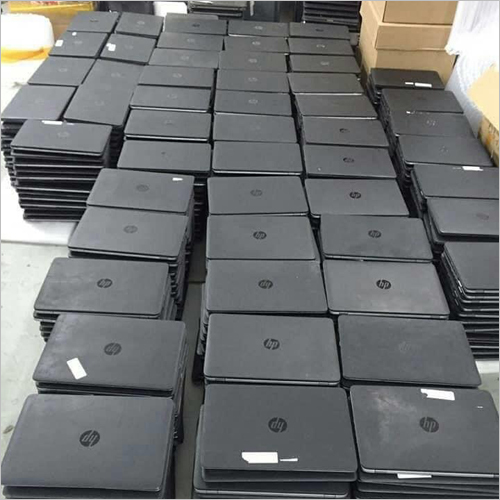
A bank with five new branches across Lagos. It needs 150 laptops for its staff, from customer service officers to branch managers.
The bank doesn’t just call a laptop seller and ask for 150 HP laptops. Its procurement team puts together a request outlining what it needs, the specifications, the quantity, its budget and the expected delivery timeline. It then invites qualified suppliers to submit their proposals.
A reseller might quote for HP ProBooks, another might recommend EliteBooks, while a third might propose a combination of both. Each supplier must explain what they can deliver, how much it will cost and the warranty and support that come with the devices. The bank reviews the submissions and chooses the supplier whose proposal best meets its requirements. This process is called a tender.
So, a bulk HP laptop tender is simply an opportunity for a reseller to compete for a contract to supply HP laptops in large quantities to an organisation.
Why Which HP Laptop To Buy Is A Wrong Question
Resellers often start a bulk quote by asking what processor or RAM configuration the client wants. The first question is what happens to this buyer’s business the day a laptop fails.
A small business owner furnishing a ten-person sales team can absorb a laptop being away for repair for a week or two. A bank, a hospital administration office, or a government department running critical daily operations cannot. That difference in downtime tolerance is exactly what separates HP’s two commercial lines, and it’s a far better opening question for a tender than what the budget is.
What HP Brings To This Specific Conversation
HP’s commercial laptop range splits cleanly along that line, with each series protecting a different operating priority rather than simply offering a different spec tier.
- The HP ProBook line is built for small to medium-sized businesses and budget-conscious professional use. Configurations typically run from Intel Core i3 through i7 or comparable AMD Ryzen options, with 8GB to 32GB of RAM and up to 1TB of SSD storage depending on model. ProBooks ship with standard commercial security features (TPM, with fingerprint sensors available on most models) and durable aluminium-and-polycarbonate builds. The standard warranty on most ProBook models is one year, typically return-to-base, which means a faulty unit is sent away for repair and can be out of service for one to two weeks.
- The HP EliteBook line is HP’s premium commercial range, built for mission-critical use, frequent travel, and organisations with stricter security requirements. EliteBooks carry Intel Core i5 through i7 (or Xeon on higher configurations), up to 64GB of RAM, and up to 2TB of SSD storage on higher-end models, alongside advanced security such as HP Wolf Security, TPM, fingerprint and smart card options, and in several models, a sturdier aluminium or magnesium chassis. The defining difference for a bulk buyer, though, is that EliteBooks typically carry a three-year next-business-day on-site warranty as standard.
What A Good HP Bulk Quote Includes That A Generic One Misses
- Security requirements tied to the data the devices will actually hold: A fleet handling customer financial data, health records, or government information benefits from the advanced security baked into EliteBook models. A fleet used mainly for documents, email, and general office work is usually well served by ProBook’s standard commercial security tier.
- Mixed-tier fleets for mixed-risk teams: A single institutional buyer, a ministry, a bank, a university, rarely has one uniform user group. Branch managers or department heads handling sensitive work are often better matched to EliteBook, while general administrative staff are well served by ProBook. Recognising that split early, the same way a good laptop might mix tiers across departments, lets you quote accurately in one proposal instead of renegotiating scope after deployment.
- Spare units and accessory stock for the warranty tier chosen: A ProBook fleet with return-to-base warranty needs a larger buffer of spare units, since a unit under repair is genuinely unavailable for one to two weeks. An EliteBook fleet with next-business-day onsite support needs a much smaller buffer, since downtime per incident is measured in a day, not weeks. Pricing the right number of spares into the tender is part of matching the quote to the warranty tier.
Why This Matters For Stocking
HP’s ProBook and EliteBook lines aren’t competing for the same reseller customer; they’re serving two different risk profiles. A reseller who only stocks ProBook is well positioned for SMEs and budget-sensitive rollouts but is leaving the higher-margin institutional tender, the bank, the hospital administration, the government ministry — to a competitor who can speak confidently about on-site warranty terms. A reseller who only stocks EliteBook is pricing themselves out of the volume-driven education and SME tenders that make up a large share of bulk demand.
Carrying both, and leading each pitch with the warranty and risk conversation rather than the spec sheet, is what lets a reseller serve both ends of a bulk tender instead of competing only for one.
Why This Changes How Resellers Should Pitch A Laptop Order
If you’re a reseller fielding both SME and institutional laptop enquiries, running the same generic here’s the processor and RAM pitch for both costs you credibility with the buyers who matter most. A procurement officer sourcing laptops for branch staff at a bank wants to hear about on-site warranty response time before they want to hear about benchmark scores. A school administrator furnishing a computer lab wants to know how ProBook pricing holds up across 150 units before anything else. Leading with the wrong pitch signals, correctly, that you haven’t thought through what makes their specific rollout different.
TD Africa’s distribution of HP’s commercial range gives resellers this kind of configuration flexibility: ProBook and EliteBook units stocked side by side, warranty terms confirmed upfront for each tier, and the ability to quote a mixed-tier fleet in one proposal rather than discovering the mismatch after deployment.
CONCLUSION
A ProBook and an EliteBook can sit on the same distributor price list and still answer two completely different business questions. The buyer furnishing a bank branch is thinking about what happens the day a laptop fails and whether a technician shows up the next business day or the device disappears for two weeks. The buyer furnishing a classroom is thinking about how far the budget stretches across every seat. Resellers who separate these conversations from the first call, and who source through a partner who stocks both tiers with warranty terms confirmed, close both kinds of tenders faster than the ones still quoting every bulk laptop order off the same spec sheet.
FAQS
- What’s the real difference between HP ProBook and EliteBook for a bulk order?
The clearest difference for a bulk buyer is warranty response. ProBook typically carries a one-year warranty that is often return-to-base, meaning a faulty unit can be away for repair for one to two weeks. EliteBook typically carries a three-year next-business-day onsite warranty, meaning a technician comes to the buyer’s location the next business day. - Should every bulk order use the same HP tier across all units?
Not necessarily. Institutional buyers with mixed-risk teams, such as branch managers alongside general administrative staff, often benefit from mixing ProBook and EliteBook units within the same order, matching each tier to how critical that role’s laptop uptime actually is. - How many spare units should be included in a bulk HP laptop tender?
This depends on the warranty tier. A ProBook fleet with return-to-base warranty needs a larger spare buffer, since a unit under repair is unavailable for one to two weeks. An EliteBook fleet with next-business-day onsite support needs a smaller buffer, since downtime per incident is typically measured in a day. - How can resellers source genuine HP laptops for a bulk order?
Through TD Africa, an authorised HP distributor. Devices are sourced through official channels, ensuring genuine hardware backed by HP’s manufacturer warranty and structured after-sales support appropriate for institutional deployments.
