

If you’ve stocked shelves in this market long enough, you already know the uncomfortable math: the phones that move fastest are rarely the ones with the flashiest specs. They’re the ones your customer can actually afford to walk out with today, without a payment plan conversation that kills the sale. That’s the tension every reseller across Nigeria and the wider continent lives with: margin pressure on one side, a price-sensitive buyer on the other, and a shelf that has to work for both.
Infinix has built its entire business around that tension, and it’s worth understanding exactly how, because the strategy behind it has implications for what you stock, how you position it, and where the real margin opportunity sits.
The scale behind the strategy
Transsion Holdings, the parent company behind Infinix, Tecno, and itel, now accounts for roughly half of all smartphone shipments across Africa, a position built almost entirely on devices designed for underserved, budget-conscious buyers rather than premium seekers chasing the latest flagship. That’s market leadership, achieved by going deliberately downmarket while Samsung and Apple defended the top.
The scale shows up globally too. Infinix’s worldwide market share has climbed steadily over recent quarters, and the brand now ranks among the top five smartphone makers in over a dozen markets, with outright leadership in places like the Philippines and Pakistan. The pattern is consistent everywhere it appears: go where affordability is the primary purchase driver, and out-execute competitors on the specific features that price-sensitive buyers actually care about.
Affordability isn’t the same as cheap
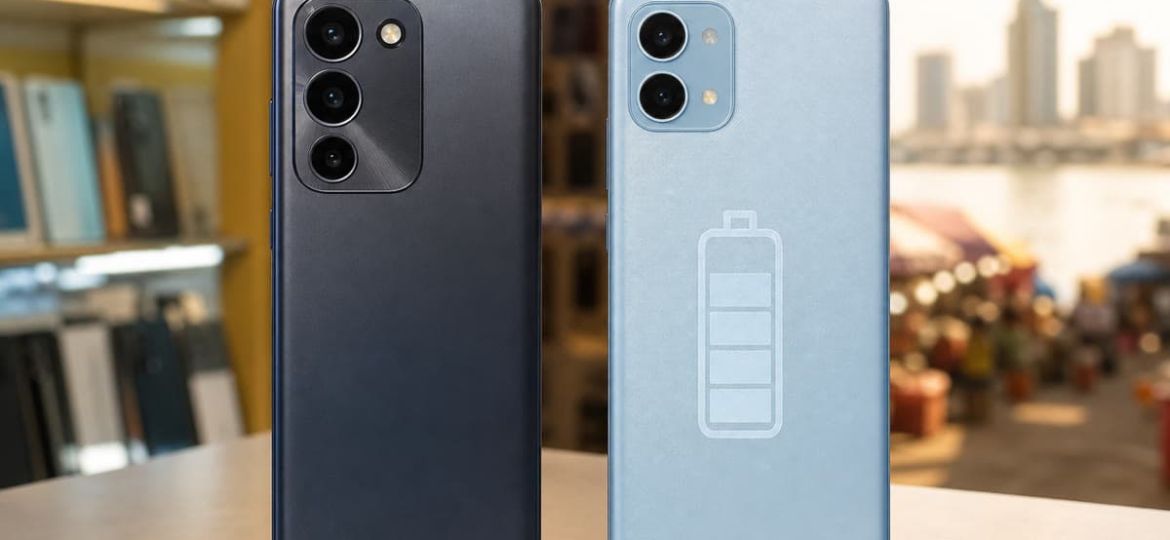
Infinix’s devices are engineered around the realities of the African market specifically: long battery life for regions where power supply is inconsistent, dual-SIM support for buyers juggling multiple networks for cost or coverage reasons, and camera tuning built around darker skin tones rather than a one-size-fits-all sensor calibration borrowed from a different market. None of that is a discount version of a premium phone. It’s a different design brief entirely, built for the buyer in front of you rather than a buyer somewhere else.
That localisation extends to where the phones are actually made. Assembly plants in Ethiopia and Egypt are cutting import duties and shortening supply chains, which is part of why Infinix can hold pricing steady even as global component costs climb. For resellers, that translates into fewer of the sudden price shocks that come from pure import dependency, though currency movement on the Naira still shows up at the till, and it’s worth setting that expectation with customers upfront rather than after a price changes between visit and pickup.
Where the money actually is
Infinix isn’t just winning on pricing alone. Its growth is increasingly coming from the segment just above entry-level devices like the Note and Hot series, which add AMOLED displays, fast charging, and genuinely capable mid-range chipsets while staying well under flagship pricing. In the Nigerian market specifically, that upper-affordable tier is where much of the upgrade traffic is heading: buyers who owned an entry-level Infinix two years ago and now want something noticeably better without jumping to Samsung’s A-series or Galaxy tier.
That’s the shelf conversation resellers should be having. A customer walking in asking for the cheapest phone is often better served, and more profitable to you, with a slightly higher-tier Hot or Note model once they see the AMOLED display and charging speed difference next to the entry unit. The spec gap is real and visible in five minutes of hands-on comparison, which makes it an easy upsell rather than a hard one.
The competitive pressure building underneath
Consumers across the continent are getting more sophisticated, and rivals are closing the price gap while adding their own localised features. Infinix’s next phase of growth depends less on being the cheapest option and more on being the smartest value option, which is exactly the argument resellers can make to customers who are comparing Infinix against Tecno’s Spark series or newer budget Android entrants: similar price bands, but a more mature software experience and a longer track record of security updates on current-generation models.
Older Infinix lines are aging out of OS support, and customers holding onto a three- or four-year-old Note or Hot model are running phones that no longer receive security patches, a real risk for anyone banking or transacting on mobile.
What this means for your shelf
Affordability, done well, isn’t a race to the bottom; it’s a design discipline. Infinix’s continued growth suggests the winning move for resellers isn’t stocking the absolute cheapest SKU and hoping volume covers the margin. It’s stocking the right tier within the affordable range, and having the fluency to explain to a customer exactly why the extra ₦20,000–₦50,000 buys them a materially better display, faster charging, and a phone that’ll still be secure two years from now.
That’s the kind of positioning conversation TD Africa exists to support, not just moving units, but helping resellers sell the right unit to the right customer, with the margin and the trust intact on both sides.
Conclusion
Infinix’s rise across Africa isn’t an accident of low pricing; it’s the result of treating affordability as an engineering problem rather than a compromise. Every design choice, from battery life to camera tuning, was built around how people here actually use a phone, not a scaled-down version of what sells somewhere else. That’s the reason the brand has been able to hold market leadership even as rivals close in on price.
For resellers, the lesson carries directly onto the shelf. The goal isn’t to out-discount the competition; it’s to know your inventory well enough to move a customer confidently from cheapest to right fit, and to trust that the margin difference is earned, not forced. Get that conversation right, and Infinix becomes less of a low-margin volume line and more one of the more dependable, explainable parts of your shelf.
FAQs
- Is Infinix a budget brand or a mid-range brand?
Both, depending on the series. The Smart and entry Hot models sit firmly in the budget tier, while the upper Hot and Note series have moved into genuine mid-range territory with AMOLED displays and fast charging. Positioning a customer with the right series matters more than labelling the brand as a whole. - Why do older Infinix models stop getting software updates?
Like most Android manufacturers, Infinix supports a device for a set number of years before shifting engineering resources to current-generation models. Once a phone ages out of that window, it stops receiving security patches, which is a real concern for anyone using the device for banking or other sensitive transactions, not just a performance issue. - How should a reseller handle Naira-driven price changes on Infinix stock?
Set the expectation upfront rather than after the fact. Since a portion of Infinix’s cost base is still tied to imported components, currency movement can shift pricing between a customer’s first visit and their return to purchase. Flagging that possibility early protects trust better than a surprise at the till.
