

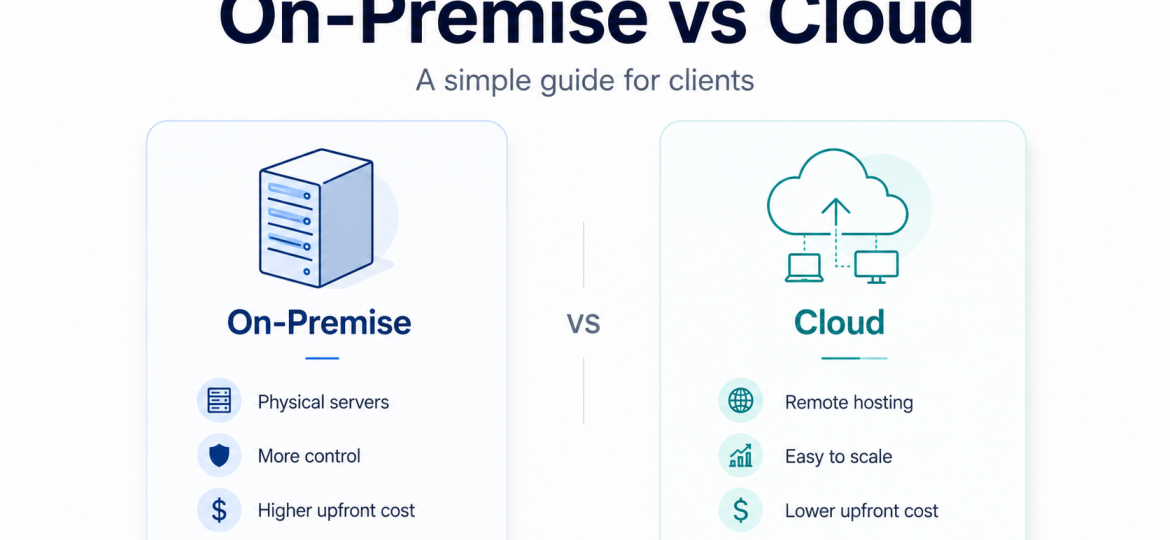
Organisations are using cloud services more and more to scale operations with flexibility. According to Gartner, over 50% of businesses would adopt cloud platforms to expedite their commercial efforts by 2028.
In a public cloud, a third-party service provider builds and maintains computer resources, including servers, software programs, storage, individual virtual machines, enterprise-grade infrastructure, and development platforms, and makes them accessible to users via the public internet.
The data centers that house your workloads are owned and run by cloud service providers. In addition to offering high-bandwidth network connectivity so you can effortlessly access your apps and data, they are in charge of managing your gear and infrastructure.
These services are available to you for free or for a fee based on usage or subscriptions.
The most common cloud service models used today are:
- Software-as-a-Service (SaaS): Software applications are hosted in the public cloud and are accessible through SaaS. This implies that you may just utilise these apps via a web browser or an API without having to install them on your local devices.
SaaS companies oversee security, updates from start to finish, and all maintenance. Because numerous users may access the app from any location, this concept is both scalable and economical. Some popular providers of SaaS are Asana, Trello, Apollo, HubSpot, Microsoft Azure, etc.
- Platform-as-a-Service (PaaS): gives you a complete environment in which to develop, launch, and manage your applications. All required hardware, software, and infrastructure, including operating systems, databases, middleware, and programming frameworks, are included in these platforms.
You may concentrate on code and app logic since the cloud provider handles all of these. Among the leading PaaS vendors are Oracle Cloud Platform, SAP HANA Cloud, DigitalOcean, Mendix, and Engine Yard.
- Infrastructure-as-a-Service (IaaS): With Infrastructure as a Service (IaaS), the public cloud provider gives you on-demand access to basic network, storage, and computing resources via dedicated connections or the internet. These infrastructure services are available for pay-as-you-go rental.
Through dedicated connections or the internet, the public cloud provider offers you on-demand access to basic network, storage, and computing resources through Infrastructure as a Service (IaaS). You can hire these infrastructure services on a pay-as-you-go basis.
This helps you save money on maintenance and expenditures on physical gear. In this approach, some significant service providers include DigitalOcean, Red Hat, IBM, Microsoft, etc.
What is On-Premise Infrastructure?
On-Premise Infrastructure are systems, including servers, storage, and networks, that are physically housed in your own buildings are known as on-premises infrastructure.
All hardware and software licensing, including new updates, upgrades, and security, must be purchased, installed, managed, and maintained by you. Although you have complete control over your data and configurations with this solution, owning all of these can be expensive.
Key Differences Between On-Premise and Cloud Infrastructure
Maintenance and Infrastructure Administration
The service providers are primarily responsible for maintaining cloud systems. They maintain the server, handle software updates and security fixes, and guarantee that you always have access to the most recent versions. Within the cloud, you are alone in charge of your own programs and configurations.
This means you are responsible for maintaining all of the hardware and software in on-premises environments. This might raise your overhead expenses because you have to repair old technology, maintain security fixes, install updates on a regular basis, and guarantee uptime.
Security and Compliance
Cloud providers follow a shared responsibility model. You are in charge of safeguarding your own data, users, and configurations while they secure the physical infrastructure and essential services. To increase data security and transparency, several top cloud providers make investments in identity management, advanced encryption, and compliance certifications like FedRAMP and ISO 27001.
You have complete control over compliance procedures, access control, and data security when using on-premises systems. You can create unique access controls, encryption standards, and firewalls that complement the internal security frameworks of your business.
Scalability and Flexibility
Public cloud environments are specifically designed for on-demand scalability. Depending on your business, you can easily scale up or down your computing resources, such as storage, memory, and processing power, based on your workload demands. Therefore, cloud solutions can easily adapt resources to match consumption without impacting performance if your company has traffic spikes or high data volumes.
In on-premises systems, scaling is more costly and takes longer. It may be necessary to upgrade power and cooling systems, buy and install new hardware, and manually configure nearly everything.
Operational Control and Management
Although cloud solutions offer you many configuration options, the control you have over the operations is limited. The provider usually manages some layers of the stack, like the hardware, security updates, and underlying infrastructure.
You might not have control over which physical server your virtual machine runs on. You still have control over your data, who can access it, and the OS configurations.
With on-premises infrastructure, you have total control over the systems you run in your own data center or on-site server.
Depending on the business you work in, you determine what hardware to use, how to store data, who may access it, how to arrange networking, and what security standards to apply. This is one of the primary causes of the continued preference for on-premises systems in many sectors.
Cost Comparison: On-Premise vs Cloud
You typically pay for the resources you consume while utilising public cloud services. Hardware, software licenses, installation, and maintenance don’t require large upfront expenditures. Additionally, redundancy, security, and compliance elements are already included in the majority of cloud services, which further reduces operating costs.
In contrast, on-premises infrastructure necessitates large upfront expenditures for networking, software, and hardware. Not only that, but security, compliance, support, and maintenance must all be taken into account.
Public Cloud vs On-Premise Comparison
Here is a list of the differences between on premise vs cloud:
| Aspect | On-Premise | Public Cloud |
| Maintenance | The infrastructure, patches, updates, and maintenance are all managed by cloud providers. | Updates, hardware replacements and upgrades, and physical system maintenance are handled by internal teams. |
| Scalability | On demand, resources can be expanded or contracted. | Planning to accommodate expansion and the acquisition and installation of extra gear may be necessary for scaling. |
| Control | Restricted control because cloud providers handle the underlying hardware and infrastructure, including security and updates | Total command over data management, security, infrastructure, and configurations |
| Cost | You just pay the operation/usage cost; there is no initial hardware investment. | Increased initial purchase prices as well as implementation, maintenance, and update costs |
Conclusion
Choosing between on-premises and cloud infrastructure isn’t about picking the better option; it’s about matching the infrastructure to the business. A fintech company handling sensitive transaction data under strict regulatory requirements may lean toward on-premises for full control. A fast-growing e-commerce business dealing with unpredictable traffic spikes may find the cloud’s on-demand scalability far more practical. Many organisations today are landing somewhere in between, running a hybrid model that keeps certain systems in-house while offloading others to the cloud.
As a technology distributor, TD Africa works closely with resellers, enterprises, and public sector clients across Africa, TD Africa helps businesses navigate this decision with the right infrastructure, hardware, and managed hosting solutions to match their specific operational needs, whether that means equipping an on-premise data centre or supporting a cloud-first transition. The goal isn’t to push businesses toward one model, but to help them build an infrastructure strategy that actually fits how they operate.
FAQs
- Can a business run both On-premise and cloud infrastructure at the same time?
Yes. This is called a hybrid model, and it’s increasingly common. A business might keep sensitive data or legacy systems on-premise for control and compliance reasons, while running customer-facing applications or scalable workloads in the cloud.
2. If the cloud has lower upfront costs, does that mean it’s always cheaper long-term? Not necessarily. Cloud pricing is usage-based, so costs can grow steadily as data volume, traffic, or storage needs increase, sometimes surpassing what an equivalent on-premises setup would have cost over the same period.
3. Which option gives better data security, Cloud or On-premise?
Neither is automatically more secure; it depends on how well each is managed. Cloud providers invest heavily in physical infrastructure security and often hold compliance certifications, but the business is still responsible for securing its own data, access, and configurations under the shared responsibility model.
