

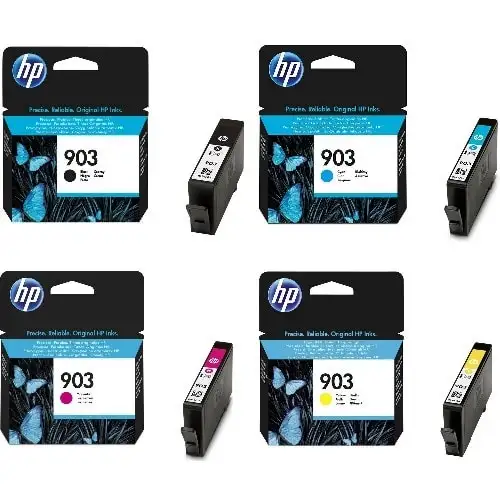
If you’ve ever had a print run fail on the day it mattered most, a client presentation, a batch of invoices, a reseller order waiting on your shelf, there’s a decent chance the culprit wasn’t the printer. It was the toner.
Counterfeit toner cartridges are one of those problems that hide in plain sight. The box looks right, the price looks better than right. And then, a few hundred pages in, prints start streaking, the printer throws error codes it’s never thrown before, and a warranty claim gets quietly denied because the cartridge inside wasn’t the one HP built the printer to trust.
For resellers, enterprise IT teams, and SMEs who depend on consistent print output, this isn’t a minor inconvenience; it’s a cost that compounds. Damaged print heads, voided warranties, wasted paper, and lost time all trace back to a decision made at the point of purchase. The good news is that spotting a counterfeit doesn’t require special equipment or insider access. It requires knowing what to look for, in the right order.
Here’s the professional-grade way to do it.
1. Start With the Packaging
Genuine HP cartridges ship in packaging that’s deliberately hard to fake convincingly, which means the packaging is often where the first cracks show.
- The HP security label: Authentic boxes carry a holographic seal that shifts as you tilt it. Look for the “OK” mark and a checkmark that appear to move in opposite directions when the angle changes. A flat, static, or dull holographic sticker is a warning sign.
- Branding consistency: Genuine HP packaging uses precise fonts, consistent logo placement, and specific colour tones. If something about the box feels slightly “off” a logo that’s a shade too bright, misaligned text compare it directly against the product listing on HP’s official site.
- Seal integrity: HP boxes are sealed in a way that makes tampering obvious. A box that’s been resealed, has a loose flap, or shows adhesive residue where there shouldn’t be any deserves a second look before it ever reaches a customer or a printer.
2. Verify the QR Code and Serial Number
Scanning the QR code with the HP SureSupply app, or entering the serial number on HP’s official verification portal, is the fastest first check and should be standard practice for every incoming cartridge, not just the ones that look suspicious.
But treat this as a first filter, not a final verdict. Counterfeiters have gotten better at reproducing codes that scan as valid at a glance. If a serial number fails outright, that’s conclusive. If it passes, move on to the physical checks below before you consider the cartridge cleared genuine; verification is layered, not single-point.
3. Examine the Cartridge Itself
Once the cartridge is out of the box, the physical build tells its own story:
- Logo and engraving: Genuine HP cartridges have crisp, precisely printed or engraved branding. Counterfeit units often show slightly blurred edges, inconsistent spacing, or a logo that looks “printed twice” under close inspection.
- Build quality: Authentic cartridges feel solid, with smooth seams, no visible gaps, and no flex where there shouldn’t be any. A cartridge that feels light, hollow, or has visible mould lines and rough edges is a strong counterfeit indicator.
- The print test: This is the check that matters most for your actual use case. Run a test page; genuine toner produces sharp, consistent text and clean image edges no smudging, no streaking, no uneven density across the page. If the first printout of a new cartridge already looks inconsistent, don’t wait for page 500 to confirm your suspicion.
4. Buy From Suppliers Whose Sourcing You Can Actually Trace
This is the step that prevents most counterfeit problems before they start, and it matters more than any single inspection technique. The cartridges that pass every visual check but fail three weeks into use are almost always the ones that entered the supply chain through an unverified seller.
Red flags worth walking away from, every time:
- A price meaningfully below the market range for that cartridge model; counterfeiters compete almost entirely on price because they can’t compete on reliability.
- A seller who can’t or won’t provide a receipt, invoice, or proof of authenticity on request.
- Cartridges offered loose, without original HP packaging, for a better deal.
For resellers and enterprise buyers in particular, this is where the sourcing relationship does more work than any individual product check. Buying through an authorised distributor like TD Africa with a documented, traceable supply chain means the verification has effectively already happened before the box reaches you, and it means there’s an accountable party on the other end if something ever doesn’t add up.
5. Report What You Find
HP runs an active Anti-Counterfeit Program, and reporting a suspicious cartridge or vendor isn’t just a formality; it’s how the broader market gets safer for every other buyer sourcing from the same channels. If a cartridge fails verification, reporting it through HP’s official channels protects the next reseller, the next SME, the next enterprise buyer from the same seller.
The TD Africa Standard
This is exactly the risk a verified distribution relationship is built to remove. As an authorised distributor, TD Africa sources HP consumables through channels that are traceable from origin to delivery, which means the packaging, security seal, and serial number checks above should confirm what’s already true, rather than catch a problem after the fact.
For resellers stocking shelves, SMEs keeping an office running, or enterprise buyers managing print fleets at scale, that’s the real value of sourcing through a distributor with accountable supply chains: fewer surprises, fewer warranty disputes, and print output that performs the way it’s supposed to, every time. Reach out to your TD Africa account team to source verified HP toner and consumables for your business.
Conclusion
Counterfeit toner rarely announces itself at the point of sale; it shows up later, in a streaked page, a voided warranty, or a printer that stops behaving the way it used to. That’s what makes verification a discipline rather than a one-time glance: check the packaging, confirm the code, inspect the cartridge, and run the print test before you trust any cartridge on the shelf or in a customer’s hands. But the single highest-leverage step is the one that happens before any of that: buying from a source whose supply chain you can actually trace. Get that right, and every other check becomes confirmation rather than damage control.
FAQs
- Can a counterfeit toner cartridge pass the QR code or serial number check?
Yes, some counterfeit operations have gotten sophisticated enough to reproduce codes that scan as valid at a glance. That’s why a passed scan should be treated as a first filter, not a final verdict; it needs to be backed by the physical checks (packaging, cartridge build, print test) before a cartridge is considered genuine. - Is it worth buying cheaper, unbranded, or compatible toner instead of original HP cartridges?
It depends on what you’re optimising for. Genuinely compatible, properly manufactured alternatives exist and are sold transparently as such. The risk is specifically with cartridges sold as genuine HP at suspiciously low prices; those are the ones most likely to damage print heads, void warranties, and cost more in the long run than the upfront saving. - What’s the fastest way for a reseller or enterprise buyer to reduce counterfeit risk without inspecting every single unit?
Fix the sourcing relationship first. Buying through an authorised distributor with a documented, traceable supply chain, such as TD Africa, means most of the verification work has already been done before the cartridge reaches you, which is far more scalable than manually inspecting every unit that comes through the door.
