

Key Takeaway:
Three key takeaways from the article:
- El Niño has made solar backup an urgent need; intensifying heat plus an already-strained grid means customers are losing cooling and refrigeration right when they need it most.
- The iPower range covers three distinct gaps. Inverter handles the switch when the grid fails, battery covers the hotter nights, panel generates more under El Niño’s stronger sun; together, they get better as the problem gets worse.
- TD Africa reduces the risk of selling into the surge. Genuine warranty-backed stock, a complete matched system, real-time SuperApp pricing, and real support after the sale.
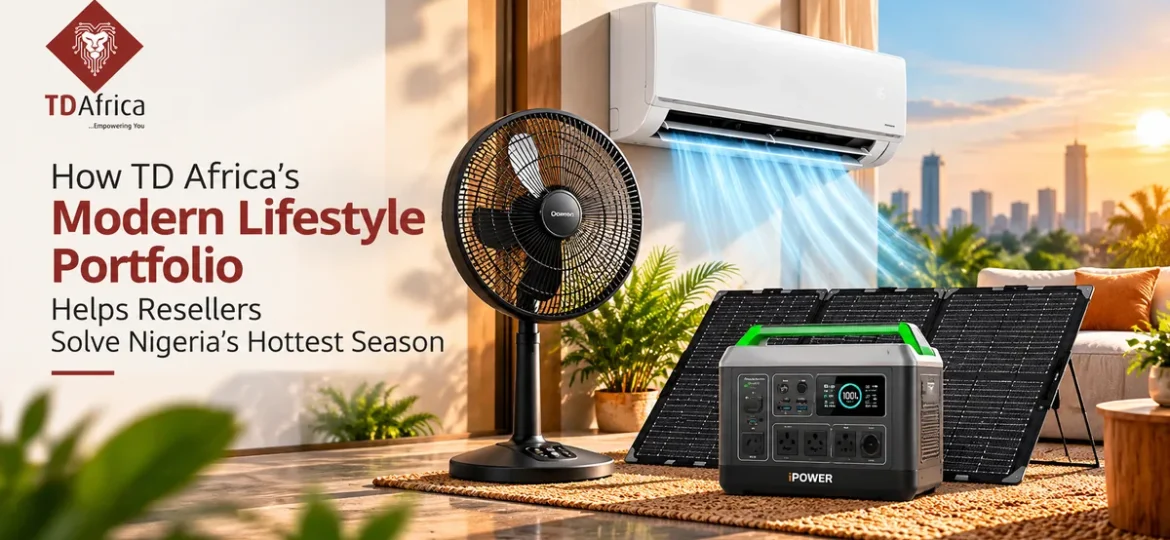
As Nigeria faces intensifying heat and unreliable grid power, demand for dependable cooling and backup power solutions is becoming an opportunity for resellers. For TD Africa partners, the iPower range of solar inverters, batteries, and panels offers a practical way to help customers keep essential appliances running while building a more resilient power setup. Here’s how resellers can meet the seasonal demand with genuine products, matched systems, and reliable distributor support.
THE HEAT ISN’T A FEELING, IT’S A FORECAST
Nigeria’s Meteorological Agency (NiMet) confirmed the onset of a strong El Niño event in its August 2026 climate update, and international forecasters expect it to strengthen further before easing in early 2027.
For resellers, the technical explanation matters less than what it means on the ground: longer stretches of heat, nights that don’t cool the way they used to, and a power grid that was already struggling now being asked to carry an even heavier cooling load.
This isn’t a one-off hot week that passes and gets forgotten; it’s a season-long shift, and it’s arriving at the same time millions of Nigerian households and small businesses are already managing unreliable grid power. Put those two pressures together, intensifying heat and inconsistent electricity, and you get a very specific, very sellable problem: people need their cooling and refrigeration to work reliably, and they need it to keep working when the grid doesn’t.
This is exactly where TD Africa’s Modern Lifestyle business unit, and specifically the iPower range of solar inverters, batteries, and panels, becomes more than a product category. It becomes the answer to a question nearly every customer is quietly asking right now.
WHY THIS MOMENT FAVOURS SOLAR OVER DIESEL
For years, the default response to unreliable power in Nigeria has been a generator. El Niño changes that calculation in a way worth explaining to customers directly.
Heatwaves tend to arrive alongside higher fuel demand and tighter fuel budgets, as everyone runs cooling appliances longer and more often. A generator that was already an expensive daily habit becomes a more expensive one exactly when a household can least afford it, since longer heat means longer running hours to keep a fan or fridge going through the night. Solar, by contrast, gets more productive in exactly the conditions El Niño is bringing: more sun, more consistent daytime charging, and a system that doesn’t need fuel queues or rising pump prices to keep working.
THE IPOWER LINEUP MAPPED TO THE PROBLEM
Each piece of the iPower range solves a distinct part of the heat-and-power problem, which makes it easier for a reseller to match a solution to a specific customer rather than pitching a generic bundle.
- iPower Hybrid Inverters: The heart of the system, and the part that solves the unpredictability problem directly. A hybrid inverter like the iPower 5KVA/48V doesn’t force a household to choose between solar, battery, and grid power; it moves between all three automatically, drawing from whichever source is actually available. When the grid fails mid-heatwave, which is precisely when demand on the grid spikes and outages become more likely, the inverter switches to battery or solar without the customer lifting a finger.
- iPower Batteries: This is what turns daytime sun into nighttime relief. El Niño’s heat doesn’t clock out at sunset; nights are staying warmer and heavier than Nigerian households are used to. A battery bank stores the energy a solar panel collects during the day so a fan or fridge can keep running through the hours when heat is hardest to sleep through, and the grid is least reliable.
- iPower Solar Panels: The generation layer, and the part of the system that benefits most directly from El Niño’s intensified sun exposure. More consistent, stronger sunlight during an El Niño period means panels charge faster and more reliably, which shortens the gap between what a household uses and what the system can replace. This is also the part of the pitch that appeals to a customer thinking beyond this one season: panels are a long-term asset, not a response to one bad year.
Sold together, these three pieces form a system that doesn’t just cope with El Niño; it performs better because of certain conditions El Niño brings: more sun, more consistent daytime generation, while insulating the customer from the conditions it makes worse, grid strain and rising fuel costs.
HOW TD AFRICA HELPS RESELLERS ACTUALLY CLOSE THIS
Knowing the right product isn’t the same as knowing how to sell it, stock it, and support it. This is where TD Africa‘s role as an authorised distributor matters for resellers navigating a demand spike.
- Genuine stock, sourced ahead of the surge: As heat intensifies, demand for cooling and backup power solutions rises fast, and resellers who source through unauthorised channels to chase quick stock often find themselves with units that carry no real warranty backing if something fails under sustained heavy use. TD Africa’s authorised distribution means resellers are stocking genuine iPower units with manufacturer-backed warranty from day one.
- A system, not a single product: Because TD Africa carries the full iPower range- inverter, battery, and panel- resellers can offer a complete, matched solution rather than selling a customer one piece and leaving them to source the rest elsewhere, often from a different brand that doesn’t integrate cleanly. A matched system is also an easier sale: one conversation, one quote, one warranty relationship.
- Pricing and stock visibility through the SuperApp: TD Africa’s SuperApp gives resellers real-time access to current wholesale pricing and stock availability, which matters more during a demand surge than at any other time of year. Knowing what’s in stock and at what price, without waiting on a phone call.
- Support that doesn’t end at the sale: Because the iPower range is sourced through an authorised channel, resellers have a real distributor relationship to lean on if a customer has a warranty question or a system needs servicing, rather than being left to field that call alone with no manufacturer backing behind them.
Conclusion
El Niño is a season already unfolding, and it’s changing what customers are walking into shops needing. The resellers who recognise this early, and who position the iPower inverter, battery, and panel range as a complete answer to intensifying heat and unreliable power, are the ones who turn a difficult season into their strongest sales quarter of the year.
The heat isn’t going to ease on its own. But the system you put in a customer’s home can make sure that’s the last thing they have to worry about.
FAQS
- Why does solar make more sense than a generator during a heatwave specifically?
Heatwaves increase how long cooling appliances run, which drives up fuel consumption and cost for generator-dependent households exactly when budgets are tightest. Solar systems, by contrast, benefit from the stronger, more consistent sunlight that comes with an El Niño period, making them more productive, not more expensive, during the exact conditions driving up demand. - Which iPower product should a reseller lead with when a customer has a limited budget?
The hybrid inverter solves the most urgent part of the problem, automatic switching when the grid fails, and can be paired with a smaller battery and panel setup that’s expanded later as budget allows. Leading with the inverter lets a reseller start the relationship now and grow the system with the customer over time. - How can resellers avoid running out of stock during peak heat demand?
Checking current stock and pricing through the TD Africa SuperApp before committing to a customer quote, and placing restock orders early in the season rather than waiting for shelves to empty, are the two most reliable ways to stay ahead of a demand spike once a heatwave takes hold.
