


A network outage during a critical transaction costs more than money—it costs trust. For West African enterprises competing in an increasingly digital economy, the networking equipment you choose determines whether your infrastructure becomes a growth engine or a constant source of frustration.
This guide walks you through evaluating enterprise networking equipment for West African conditions, from understanding core features and equipment categories to selecting vendors and overcoming regional challenges like power instability and limited local support.
What is enterprise networking equipment?
When choosing enterprise networking equipment in West Africa, you’re looking at durable, scalable hardware switches, routers, and firewalls from vendors like Cisco, Huawei, or Juniper. The key considerations include robust power backup for unstable electricity, ISP compatibility, and equipment that supports future growth through technologies like SD-WAN.
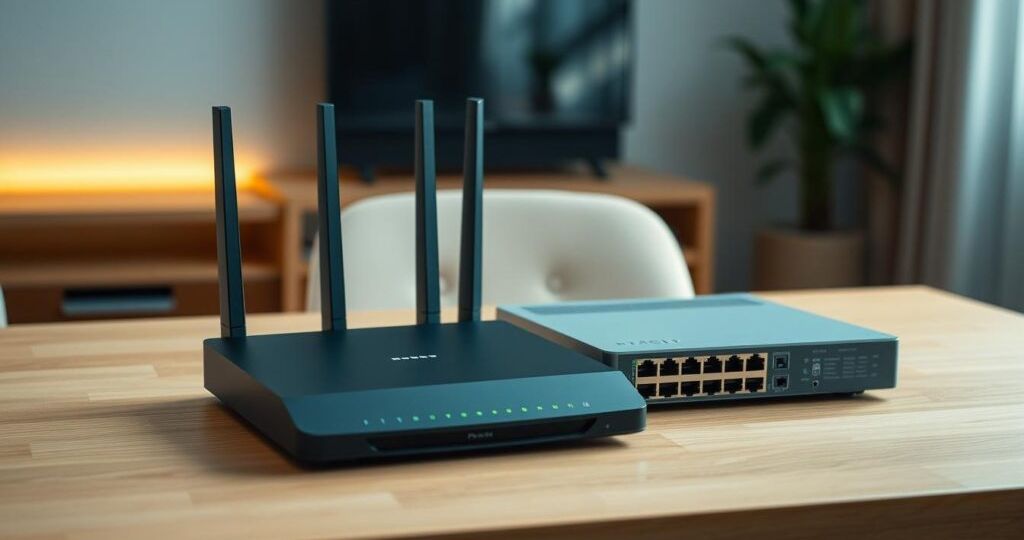
So what exactly counts as enterprise networking equipment? It’s the hardware and software that connect, manage, and secure your business network. Routers direct traffic between your network and the internet. Switches connect devices within your building. Firewalls block threats. Wireless access points enable WiFi.
Think of it like the difference between a family car and a commercial truck. Your home router handles a few devices streaming Netflix. Enterprise equipment handles hundreds of simultaneous connections, runs continuously, and gives IT teams a dashboard to monitor everything at once. The price difference reflects that gap in capability.
Why enterprise networking equipment matters in West Africa
Enabling digital transformation and growth
Reliable networking underpins everything modern businesses want to do. Cloud applications, digital payments, remote collaboration—all of it depends on network infrastructure that actually works.
Consider a Lagos financial services firm processing thousands of transactions daily. Network downtime doesn’t just inconvenience people; it stops revenue. Or picture a manufacturing company in Accra rolling out IoT sensors on the factory floor. Those sensors generate constant data streams that consumer-grade equipment simply cannot handle.
Ensuring reliability in challenging environments
West African businesses face conditions that equipment designed for London or New York may not survive. Power fluctuations, high temperatures, humidity, and dust all take their toll.
Industrial-grade switches and routers with wide voltage tolerance and extended operating temperature ranges perform better here. They cost more upfront, but they fail less often and last longer. That trade-off usually works out in your favour over three to five years.
Meeting security and compliance demands
Cyber threats targeting African enterprises have increased significantly in recent years. Banking, healthcare, and government organisations face regulatory requirements around data protection that demand enterprise-grade security.
Built-in firewalls, intrusion prevention systems, and encrypted communications come standard in enterprise equipment. Consumer alternatives simply cannot provide that level of protection.
Gaining a competitive advantage through connectivity
When your competitor’s network goes down during a power surge, and yours stays operational, that’s a competitive advantage. Organisations with strong network infrastructure respond faster to customers, collaborate more effectively across locations, and adapt more quickly to market changes.
Key features to evaluate when choosing enterprise networking equipment
Performance and throughput capacity
Performance determines how much work your network can handle at once. Three metrics matter most:
- Throughput: The volume of data your network processes per second, measured in gigabits
- Latency: The delay between sending and receiving data is critical for video calls and real-time applications
- Port density: How many devices can you connect directly to a switch or router
A 50-person office has different requirements than a 500-person headquarters. Start with your current user count, then factor in growth projections and bandwidth-heavy applications like cloud services.
Enterprise-grade security capabilities
Security features in enterprise equipment go far beyond basic passwords. Next-generation firewalls inspect traffic at the application level. Intrusion prevention systems detect and block attack patterns. VPN support enables secure remote access.
Brands like Fortinet, Palo Alto, and Cisco offer security appliances designed specifically for enterprise environments. The investment in proper security equipment costs significantly less than recovering from a data breach.
Scalability and future-proofing
The equipment you buy today will serve your organisation for years. Choosing scalable solutions means you can expand capacity without replacing everything.
Look for modular switches that accept additional line cards, routers that support software upgrades, and wireless systems designed for adding access points as coverage requirements grow. Equipment supporting 10G, 40G, or even 100G connections provides headroom for future bandwidth demands.
Management and monitoring options
How you manage your network affects both efficiency and security. Two main approaches exist:
| Management Type | Best For | Key Benefits |
|---|---|---|
| Cloud-managed | Multi-site organisations, limited IT staff | Remote access, automatic updates, centralised visibility |
| On-premises | High-security environments, full control requirements | Data sovereignty, no internet dependency |
Many organisations use hybrid approaches—cloud management for branch offices, on-premises control at headquarters.
Power efficiency and redundancy features
Power reliability remains one of the biggest challenges for West African enterprises. Your equipment selection directly impacts how well you handle this reality.
- Power over Ethernet (PoE): Delivers power and data through a single cable, simplifying deployment
- Dual power supplies: Allows connection to both mains power and UPS systems simultaneously
- Wide voltage tolerance: Equipment rated for 100-240V handles fluctuations better than narrow-range alternatives
Essential categories of enterprise networking equipment
Enterprise routers and gateways
Routers serve as the traffic controller between your internal network and the outside world. Enterprise routers handle multiple WAN connections, support advanced routing protocols, and include built-in security features.
When selecting routers, verify compatibility with your local ISPs’ technology. Dual-WAN capability allows automatic failover between connections, so if one provider has issues, your network stays online.
Network switches and access points
Switches connect wired devices within your network—computers, printers, and servers. Managed switches provide visibility into network traffic and allow configuration of VLANs to segment your network.
Wireless access points extend connectivity to mobile devices and laptops. WiFi 6 and WiFi 6E access points deliver significantly better performance in crowded environments compared to older standards.
Firewalls and security appliances
Dedicated security appliances provide protection that software-only solutions cannot match. Next-generation firewalls from vendors like Checkpoint, Fortinet, and Sophos inspect encrypted traffic and identify application-level threats.
SD-WAN and cloud-managed networking
SD-WAN (Software-Defined Wide Area Network) simplifies management of multi-site networks while optimising performance for cloud applications. Rather than expensive dedicated circuits between locations, SD-WAN intelligently routes traffic across multiple connection types based on real-time conditions.
How to select the right enterprise networking equipment
1. Assess your current network and future requirements
Start by documenting what you have. How many users? What applications do they run? Where are the current bottlenecks? What growth do you anticipate over the next three to five years?
This assessment reveals both immediate needs and future requirements. A network designed only for today’s demands will require expensive upgrades sooner than one built with growth in mind.
2. Define security and compliance priorities
Different industries face different requirements. Financial services organisations may need to comply with specific data protection regulations. Healthcare providers handle sensitive patient information. Government agencies have their own security frameworks.
Identify your specific compliance requirements early—they influence equipment selection, network architecture, and vendor choices.
3. Evaluate scalability and growth potential
Choose equipment that can expand without full replacement. Stackable switches allow adding capacity by connecting additional units. Modular routers accept new interface cards as requirements change.
4. Calculate total cost of ownership
Purchase price represents only part of the investment. Factor in installation costs, ongoing maintenance, energy consumption, training for IT staff, and potential downtime costs from equipment failures.
Quality equipment from established vendors typically delivers lower total cost of ownership despite higher initial prices.
5. Verify vendor authenticity and local support
Grey market equipment—products sold outside authorised channels—poses significant risks. Warranties may be invalid, firmware updates unavailable, and security vulnerabilities unpatched.
Working with authorised distributors ensures genuine products, valid warranties, and access to manufacturer support. TD Africa maintains authorised partnerships with over 30 global technology brands, including Cisco, Huawei, HP, Dell, and Juniper.
Common enterprise networking challenges in West Africa and how to solve them
Power instability and equipment protection
Frequent outages and voltage fluctuations damage equipment and disrupt operations. The solution combines enterprise-grade UPS systems, surge protection at every critical point, and equipment with wide voltage tolerance ratings.
Tip: When specifying UPS capacity, calculate for at least 30 minutes of runtime at full load. This provides time for a graceful shutdown during extended outages or for backup generators to start.
Limited local technical expertise
Finding certified network engineers can be challenging outside major technology hubs. Partnering with distributors that offer training programmes and ongoing technical support helps bridge this gap.
Cloud-managed networking solutions also reduce the expertise required for day-to-day operations, with vendors handling firmware updates and providing remote troubleshooting.
Counterfeit equipment and grey market risks
The price difference between authorised and grey market equipment can be tempting, but the risks rarely justify the savings. Invalid warranties, missing security patches, and potential hardware defects create long-term costs that exceed any initial savings.
Connectivity and bandwidth limitations
Inconsistent internet service affects many areas of West Africa. SD-WAN technology addresses this by aggregating multiple connections and intelligently routing traffic based on real-time performance. Failover configurations ensure that if one connection fails, traffic automatically shifts to alternatives.
How to evaluate enterprise networking vendors and distributors
Authorised distribution and global brand partnerships
OEM authorisation matters because it guarantees genuine products, valid warranties, and access to firmware updates. Authorised distributors also receive manufacturer training, enabling them to provide better guidance during selection.
Local presence and after-sales support
When equipment fails, response time matters. Distributors with regional warehousing can provide replacement units quickly. Local technical teams understand the specific challenges of operating in West African environments.
Warranty coverage and spare parts availability
Verify warranty terms before purchasing. How long is the coverage? What’s the replacement process? Are spare parts stocked locally or shipped from overseas?
Financing and flexible payment options
Large infrastructure investments can strain cash flow. Leading distributors offer flexible procurement options, including payment plans and credit facilities.
Build your enterprise network with a trusted West African distributor
Selecting enterprise networking equipment involves balancing performance requirements, security needs, budget constraints, and local operating conditions. The right equipment, properly deployed and supported, becomes a foundation for business growth.
TD Africa partners with global technology leaders, including Cisco, Huawei, HP, Dell, Lenovo, and Juniper, to deliver enterprise networking solutions across 47 African countries. With nearly three decades of experience, regional warehousing, and dedicated technical support teams, TD Africa provides authentic products and local expertise.
Ready to discuss your networking requirements? Connect with TD Africa’s enterprise solutions team to start the conversation.
Frequently asked questions about enterprise networking equipment in West Africa
What is the difference between enterprise and consumer networking equipment?
Enterprise equipment offers higher performance, advanced security features, centralised management, and durability for continuous business use. Consumer equipment handles basic home connectivity with limited capacity and minimal security. The difference is similar to comparing a commercial vehicle fleet to personal cars; both provide transportation, but they’re designed for very different demands.
How often should enterprise networking equipment be upgraded?
Most organisations review their networking infrastructure every three to five years. However, upgrades may be needed sooner if performance degrades noticeably, security vulnerabilities emerge that cannot be patched, or business requirements change significantly.
Can enterprise networking equipment integrate with existing legacy systems?
Yes, most enterprise networking equipment supports backward compatibility and industry-standard protocols. This allows integration with older infrastructure while providing a pathway to modernisation.
What warranty options are typically available for enterprise networking equipment in West Africa?
Authorised distributors typically offer manufacturer warranties ranging from one to five years, depending on the product category. Extended support contracts are available that include replacement guarantees and technical assistance.
Are financing options available for enterprise networking equipment purchases in West Africa?
Yes, leading distributors in the region offer flexible payment arrangements, including credit facilities and instalment plans to help businesses manage large infrastructure investments.
