

There’s a particular kind of regret that shows up three weeks after a wholesale phone order. It’s the regret of the deal going fine, the phones arriving, the reseller paid, the units went out to customers, and then the returns start.
A Galaxy A-series unit with firmware that keeps defaulting to a European carrier network, a batch of ten with warranty registrations that Samsung’s own portal won’t recognise.
By the time any of this surfaces, the money has changed hands, the stock is already in customers’ pockets, and the reseller is the one fielding the complaints. This is the real risk sitting underneath the question.
Nigeria’s phone market is large enough, and lucrative enough, that it has built an unofficial supply chain running parallel to the official one, close enough in appearance to fool a buyer at the point of sale, and different enough underneath to cost that buyer their margin, their warranty coverage, and eventually their customers’ trust.
Buying wholesale correctly is not just a pricing decision; it’s a supply chain decision. This guide walks through what that means in practice, and what separates a wholesale channel that protects a reseller’s business from one that quietly puts it at risk.
Why the Sourcing Channel Matters More Than the Price Per Unit
It’s tempting to treat wholesale sourcing as a single variable: who’s offering the lowest per-unit price this week. But two boxes of the same Galaxy A36 can carry very different risk profiles depending on where they entered the country and how they moved through the supply chain afterwards.
Diverted stock units originally allocated for a different regional market and rerouted into Nigeria through informal channels are a well-documented problem in Nigeria’s electronics trade. These devices often carry the wrong regional firmware, which shows up later as network compatibility issues or software that doesn’t behave the way a Nigerian customer expects. Warranty registration on this kind of stock frequently fails outright, because the device’s origin doesn’t match the market it’s being sold into. And in the more serious cases, refurbished units get repackaged and sold as new, a problem that only becomes visible once a customer opens the box or the device starts showing wear inconsistent with its supposed age.
The Nigerian Communications Commission has been vocal for years about the scale of the counterfeit and grey-market device problem in the country, and the numbers give some sense of why. The NCC’s own data puts the number of unique mobile devices connecting to Nigerian networks at over 132 million as of 2020, with roughly 63 million new phones sold annually, a market large enough that a meaningful share of it can be substandard or smuggled stock without most buyers ever noticing until something goes wrong.
That’s changing, and not in a way that favours resellers who’ve been sourcing loosely. Nigeria’s telecom regulator rolled out a Device Management System (DMS) built around IMEI tracking, developed jointly with the Nigerian Customs Service, the Standards Organisation of Nigeria, and NITDA. The system is designed to identify devices that were never type-approved for the Nigerian market and block them from working on any local network entirely. For a reseller, this is the sourcing conversation shifting.
Stock bought through an unverified channel today is stock that could stop working for a customer tomorrow, through no fault of anything the reseller did wrong except where they bought it.
What Buying Wholesale Should Actually Mean
Buying wholesale, done properly, means sourcing through an authorised distributor with a direct, verifiable relationship to Samsung’s official supply chain, not simply buying in bulk from whichever supplier quotes the best number.
TD Africa is one such channel, operating in Nigeria as Samsung’s authorised distributor. Every device sourced through that channel is new, procured directly through Samsung’s official supply chain, correctly configured for the Nigerian network environment, and eligible for full manufacturer warranty registration from day one. That last point is the one that matters most in a dispute: a customer or a downstream reseller can register the device’s IMEI on Samsung’s official warranty portal and have it confirm coverage immediately, rather than discovering months later that the unit was never eligible.
The practical benefit for a reseller working through an authorised channel is that the sourcing story becomes something that can be evidenced, not just claimed. When a client asks where the stock came from, an authorised distributor with a documented supply chain is a very different answer than a supplier at the market who’s been reliable so far.
Matching Models to the Nigerian Market You’re Actually Selling Into
Wholesale buying only pays off if the stock matches demand, and Samsung’s Nigerian lineup covers distinctly different buyers.
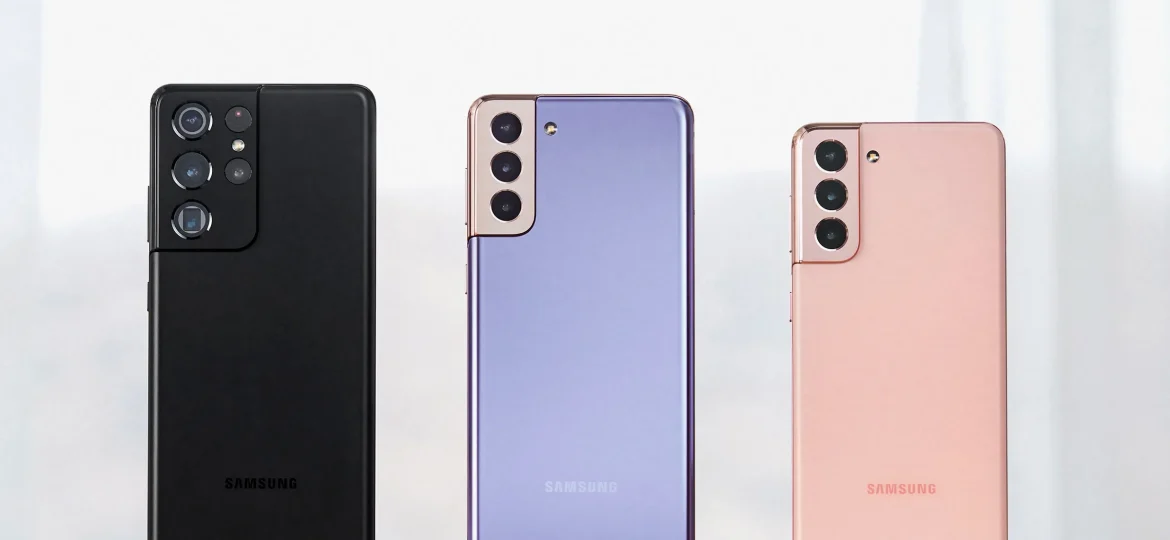
- The Galaxy A series: Models like the A56 and A36 are where the bulk of reseller volume in Nigeria should sit. Both carry IP67 dust and water resistance, large Super AMOLED displays with 120Hz refresh rates, and 4K video capability, at price points that make outfitting a full sales team or a retail fleet financially realistic. Banks equipping relationship managers, logistics firms deploying field staff, and retail chains standardising store teams are the buyers this series is built for. Volume pricing through an authorised channel makes fleet-scale deployment considerably more cost-effective than sourcing single units at retail.
- The Galaxy S series: is the flagship conversation; the S25 line runs on the Snapdragon 8 Elite for Galaxy with on-device Galaxy AI features that continue working without a reliable connection, a genuine advantage for Nigerian executives moving between client sites and offices. Seven years of committed OS upgrades change the total cost of ownership math for any organisation buying at this tier.
- The Galaxy Z series: The foldables serve a smaller, more specific buyer: senior professionals who want tablet-level screen space in a device that still fits in a pocket. It’s a lower-volume, higher-margin line, worth stocking selectively rather than in bulk.
Reading demand correctly before placing a wholesale order, rather than buying whatever’s cheapest per unit that week, is what turns wholesale stock into sold stock instead of stock sitting in a back room.
Verifying What Arrives Before It Goes Back Out the Door
Buying through an authorised channel solves most of the authenticity problem before it starts, but it’s still worth building a verification habit, both for a reseller’s own confidence and as something to demonstrate to buyers further down the chain.
Dialling *#06# on any Samsung device displays its IMEI instantly. That number should match what’s printed on the box and the receipt; any mismatch is worth stopping and questioning before the sale goes further. From there, registering the IMEI on Samsung’s official warranty portal should confirm coverage immediately; genuine hardware sourced through an authorised channel registers cleanly, every time. This two-minute habit, done before stock leaves a reseller’s hands, is the difference between a warranty claim that resolves smoothly and one that turns into a dispute nobody can settle.
How to Set Up a Wholesale Account: The Actual Steps
Getting set up to buy wholesale isn’t complicated, but it does require getting the paperwork in order before placing your first order. Here’s what the process typically involves with an authorised distributor like TD Africa.
Step 1: Register the business with the CAC.
Before any wholesale account can be opened, the business needs to exist on paper. Registration with Nigeria’s Corporate Affairs Commission and equivalent documents for other countries, and distributor partner registration forms will ask for the registration document directly.
Step 2: Get a Tax Identification Number (TIN).
A CAC certificate confirms the business exists; a TIN or its equivalent from other countries, and the Nigeria Revenue Service (NRS) confirm it’s operating within the tax framework. It’s obtainable by visiting the nearest NRS office (formerly NIRS) with a CAC certificate and valid ID, or through the FIRS online portal. The process is typically completed within a few working days. Businesses that already have a corporate bank account may find their TIN was registered automatically during account opening worth checking with a relationship manager before making an unnecessary trip.
Step 3: Gather the application documents.
Distributor onboarding forms generally ask for the company name and address, the Managing Director’s details, a phone and WhatsApp number, an email address, the TIN, a copy of the CAC Certificate of Incorporation, proof of business address (a utility bill or comparable legal document), and a photo ID for the corporate contact person.
Step 4: Submit the application.
With documents ready, the application goes to the distributor’s partnerships team for review. For non-Nigerians specifically, applications go to enquiries@tdafrica.com, but for Nigerian applications, go to https://superapp.tdafrica.com/onboard
The partnerships team is reachable directly on (+234) 09029174191 for anything that needs following up during the process.
Step 5: Get onboarded and start ordering.
Once verified, an approved partner gets access to consistent in-country stock, volume pricing structured for fleet and bulk orders rather than single-unit retail, and this is the part that pays off well past the first order: guidance on model selection and support that continues after delivery, not just up to the point of sale.
The Reseller Advantage That Doesn’t Show Up on the Invoice
None of this is only about avoiding problems; Samsung is the most recognised mobile hardware brand across every segment of the Nigerian market, consumer, business, and enterprise, which means the hardest part of a sales conversation, getting a customer to want the brand, is usually already done before a reseller says a word. What separates one reseller from another at that point is credibility, warranty coverage that actually holds when a customer needs it, a supply chain that can be evidenced rather than just claimed, and a distribution partner still available for support long after the invoice is settled.
That’s the case for building a Samsung wholesale practice through a properly authorised channel rather than piecing together supply from whoever has stock this week. The pricing conversation is only ever the first conversation. The one that determines whether a reseller has a repeat customer or a returned phone is the one about where the stock actually came from.
Ready to Set Up a Wholesale Account?
TD Africa is Samsung’s authorised distributor in Nigeria, offering registered partners consistent in-country stock across the Galaxy S, A, and Tab ranges, competitive volume pricing for bulk and fleet orders, and support that continues well past delivery.
FAQs
- Is buying from an authorised distributor more expensive than buying at open markets?
Not necessarily. Volume pricing through an authorised channel is typically structured specifically for bulk and fleet orders, which often makes it more cost-effective than piecing together stock unit by unit at retail markets, before even accounting for the warranty and authenticity risk that comes with unverified sourcing. - How do I know if wholesale Samsung stock is genuine before I resell it?
Dial *#06# to display the IMEI and confirm it matches the box and receipt, then register that IMEI on Samsung’s official warranty portal. Genuine stock sourced through an authorised distributor registers successfully every time. - What happens if I unknowingly resell a counterfeit or unauthorised Samsung phone? The customer’s warranty registration will typically fail, and under Nigeria’s incoming Device Management System, an unapproved or improperly imported device risks being blocked from Nigerian networks entirely once the system is fully rolled out. That risk sits with whoever sold the device last, which is usually the reseller.
