

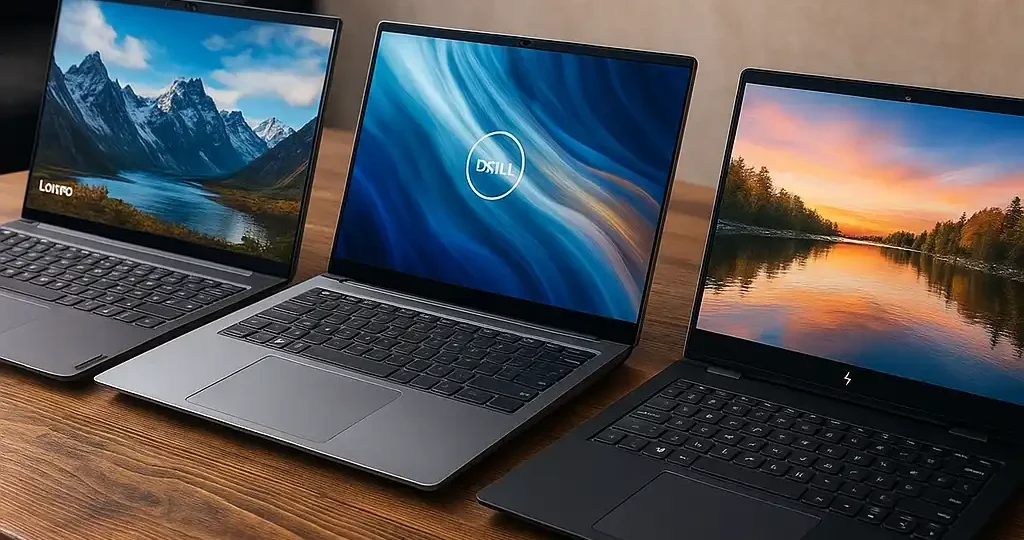
Procurement is the backbone of every organisation; it guarantees that the appropriate products and services are purchased at the appropriate time, price, and quality. This means that businesses that fail to optimise procurement run the danger of losing their competitive advantage and declining in profitability due to ineffective procurement procedures.
When a device procurement decision goes wrong, the consequences are predictable: IT support tickets that pile up faster than they can be closed, staff productivity quietly eroding under hardware that cannot handleload, warranty claims that fail because the devices were sourced outside authorised channels, and the logistical strain of managing an inconsistent device fleet across multiple branches.
Nigerian businesses that approach device purchase as an administrative exercise rather than a strategic decision frequently exhibit this pattern.
Whether you are equipping your team with business laptops for the first time, trying to bring order to an office where everyone is using a different device, or reviewing a decision that did not work out, this article is designed to help.
Understanding the Brand Landscape — What HP, Dell, and Lenovo Each Stand For.
When Nigerian businesses evaluate laptops for enterprise deployment, brand reputation often becomes the point of comparison. Beyond brand recognition, every manufacturer offers a unique approach to business computing, ranging from cost-effectiveness and performance engineering to corporate security and durability.
Prominent companies like HP, Dell, and Lenovo have established themselves in the global enterprise market by focusing on different strengths. Understanding what each brand stands for helps IT decision-makers align their laptop choices with organisational needs, whether the priority is reliability, scalability, performance, or long-term support.
HPE (Hewlett-Packard Enterprise) — Range, Accessibility, and Security
HPE focuses on enterprise-grade servers (ProLiant), storage, networking, and edge-to-cloud solutions, distributed in Nigeria through partners like TD Africa. HPE (Hewlett-Packard Enterprise) offers a legacy of enterprise-grade engineering with its ProLiant server family. If you’re focused on security, automation, and intelligent provisioning, HPE brings serious power to the table.
Pairs with HP EliteBooks to create integrated ecosystems; for example, the HPE GreenLake cloud is used to manage fleets of laptops. To safeguard corporate data across devices, HPE implements server-side zero-trust (iLO management).
Product Range
Offers compute (ProLiant servers for hybrid IT), supercomputing, AI-optimized software, networking (Aruba for secure connectivity), and services for edge-to-cloud workloads.
- HP’s strength in the Nigerian market is its wide range of products and solutions that serve many different customer segments, from the affordable HP 250 series for SMEs and budget-constrained institutions to the EliteBook range for executives and enterprise environments.
- The EliteBook Line HP’s flagship Enterprise Offering: Aluminium chassis, MIL-STD-810 military-grade durability certification, built-in TPM security chip, fingerprint reader, and smart card slot, enterprise security built into the hardware, not added on.
- HP ProBook sits between consumer and enterprise, the practical choice for growing businesses that need business-grade reliability without the EliteBook price point.
- Where HP leads: security features, design quality, and value at the SME tier through the HP 250 and ProBook lines
- Where HP is more variable, battery life can be inconsistent across product lines, and after-sales service quality has historically varied by region.
Strengths:
- Deep integration with platforms for edge and hybrid clouds.
- Advanced security features (Silicon Root of Trust).
- HPE GreenLake offers flexible financing.
Best for:
- Balanced SME Value: Affordable Proook/250 series with enterprise reliability for budget-conscious Nigerian firms scaling hybrid teams.
- Integrated Ecosystems: EliteBooks paired with HPE GreenLake/ProLiant for seamless laptop-to-server management.
- Hardware Security Starter: MIL-STD-810 durability and built-in TPM for businesses prioritizing upfront protection without premium costs.
Dell — Reliability, Manageability, and Enterprise Scale
Dell focuses on enterprise-grade laptops (Latitude), workstations (Precision), and unified endpoint management, distributed in Nigeria through partners like TD Africa. Dell offers a legacy of commercial computing engineering, with its Latitude family leading in reliability. If you’re focused on manageability, large-scale deployments, and commercial support.
Dell brings unmatched enterprise scale to the table.
Pairs with enterprise networks to create integrated ecosystems; for example, Dell’s Command Workspace manages fleets of laptops alongside Aruba or HPE infrastructure. To safeguard corporate data across devices, Dell implements endpoint zero-trust (BIOS and Endpoint hardening).
Product Range
Offers endpoints (Latitude for business mobility), high-performance workstations (Precision for CAD/Engineering), AI-optimized management software, and services for hybrid IT environments.
- Dell’s strength in the Nigerian market is its range of solutions serving diverse enterprise segments, from the reliable Latitude 5000 series for mid-sized firms and brand offices to the Latitude 7000 range for executives and data-sensitive environments.
- The Latitude Line: Dell’s flagship Enterprise Offering: Magnesium alloy chassis, MIL-STD-820H military-grade durability certification, built-in TPM 2.0 security module, contactless smart card reader, and vPro platform integration, enterprise manageability baked into the hardware, not retrofitted.
- Dell Precision sits between workstation and enterprise, the practical choice for technical teams that need GPU-accelerated performance without full server dependency.
- Where Dell Leads: Manageability tools, build consistency, and scalability at the enterprise tier through Latitude 5000/7000 and Precision lines.
- Where Dell is more variable: Premium pricing can strain SME budgets, and weightier designs may lag lightweight competitors in true mobility scenarios.
Strengths:
- Deep integration with Microsoft Intune and SCCM for fleet-wide policy enforcement.
- Advanced reliability features (ExpressCharge for power-challenged grids).
- Dell ProSupport offers flexible, SLA-backed service nationwide.
Best for:
- Enterprise Security Lockdown: Latitude’s advanced zero-trust BIOS for regulated Nigerian corporates.
- Heavy Workload Precision: Workstation-grade performance in volatile power environments.
- Long-Haul Support Contracts: Consistent global service SLAs for multinationals.
Lenovo — Durability, Productivity, and Value
Lenovo focuses on renowned business laptops (ThinkPad), mobile workstations, and value-driven productivity tools, distributed in Nigeria through partners like TD Africa.
Lenovo (ThinkPad series) offers a legacy of rugged engineering, with its spill-resistant keyboards and drop-tested chassis. If you’re focused on durability, typing productivity, and long-term value, Lenovo brings unmatched resilience to the table.
- Lenovo’s ThinkPad series built on a reputation for keyboard quality, durability, and fleet reliability that has remained consistent across decades.
- ThinkPad T series for standard enterprise users, X series for mobile and executive professionals, and ThinkPad P series for technical workstations, a logical tiering that maps clearly to organisationsal roles.
- ThinkShield security architecture, hardware based encryptions, vPro support, ThinkShutter webcam privacy, and BIOS-level protection, competes directly with HP and Dell at the enterprise security tier.
- Lenovo’s value proposition at the mid-market is particularly relevant to Nigerian business; ThinkBook and IdeaPad lines deliver business-grade reliability at price points that make fleet standardisation accessible for growing organisations.
Strengths:
- Exceptional build quality surviving Nigeria’s power fluctuations and fieldwork.
- Excellent battery life (16+ hours) for unstable grids.
- Competitive pricing with strong resale value.
Best for:
- Rugged Field Durability: ThinkPad’s spill-proof keyboards and drop-tested builds for mobile sales/operations.
- Battery Life Leadership: 16+ hour endurance suiting Nigeria’s power instability.
- Keyboard-Centric Productivity: Legendary typing for data-heavy admin roles.
Matching the Brand to the Business: A Sector and Use Case Guide
There is no one right answer when it comes to selecting between HP, Dell, and Lenovo. The right brand depends on who is using the device, what they are using it for, and what the organisation needs from the hardware over its entire deployment lifecycle. What works for a logistics company standardising devices across twelve state offices, a Fintech in Lagos increasing its engineering team, or a secondary school in Enugu?
Financial Services — Banks, Fintechs, and Insurance
For enterprise-scale financial institutions deploying devices across multiple branches and departments, Dell Latitude is the strongest recommendation. Its Intel vPro integration enables remote device management and hardware-level security that IT departments can maintain centrally, critical for a bank managing fifty branches where a device compromise at any location creates a network-wide risk. The Dell support infrastructure also provides the most consistent after-sales experience of the three brands at enterprise scale.
For fintech startups and growing financial services businesses standardising their first serious device fleet, HP EliteBook offers enterprise-grade security, TPM 2.0, hardware encryption, and fingerprint authentication at a price point that makes fleet deployment more manageable. The HP ProBook is the practical step down for non-technical staff who need business-grade reliability without the full EliteBook specification.
Professional Services — Law Firms, Consulting, and Accounting
Professionals in this industry rely entirely on their laptops. They go between boardrooms, courtrooms, client locations, and offices. Their devices must be sophisticated enough to sit on a client’s table without compromising the firm’s reputation, powerful enough to handle complicated document work and presentation software, and portable enough to travel in comfort.
Lenovo ThinkPad X1 Carbon is the strongest recommendation for senior professionals and partners in this category
- Portability, battery life, and executive presentation matter, these users move between offices, client sites, and meetings.
- Recommended approach: Lenovo ThinkPad X1 Carbon for senior professionals who priortise portability and keyboard quality; HP EliteBook 840 for executives who need premium design and security.
- Multi-branch standardisation is straightforward with ant of three brands at the Latitude, EliteBook, or ThinkPad T series tier.
For practices that prioritise design and executive presentation alongside performance, HP EliteBook 840 or 860 competes directly, premium aluminium build, strong display quality, and the kind of finish that reads as professional in any client-facing context.
Healthcare and Pharmaceuticals
Devices in healthcare environment face conditions that most enterprise hardware is not designed for, clinical settings with frequent movement of patients staff, and equipments, surfaces that need regular cleaning, and software environments that combine general productivity tools with specialist healthcare management systems. Durability and compatibility are non-negotiable specifications.
Recommended approach: Lenovo ThinkPad T series for its durability track record; Dell Latitude for multi-facility deployments where IT management consistency is the priority.
Education — Universities, Secondary Schools, and Training Institutions
Three factors dominate Nigerian education procurement: the necessity for equipment that can withstand significant shared use among student populations, budget limits, and volume. Every week, dozens of different users will handle a laptop in a university computer lab, which would drastically reduce the lifespan of most consumer gear.
The HP 250 series and Lenovo IdeaPad are the ideal options for large-scale student and lab installations, offering business-adjacent build quality at price points that enable large-volume buying without depleting institutional budgets. Fleet procurement is significantly more affordable than individual unit purchases thanks to both brands’ volume pricing through TD Africa.
Recommended Approach: HP 250 series or Lenovo IdeaPad for budget-conscious bulk deployment; Lenovo ThinkBook for faculty and administrative staff requiring business-grade reliability.
Logistics, Retail, and Multi-Branch Operations
Businesses in this industry face a unique procurement challenge that differs from most others: devices must function consistently across dozens of locations with different IT support capabilities, physical conditions, and staff who aren’t always technically proficient, rather than in a single, well-managed office setting. Battery life matters for field-facing staff, managebility matters for the IT team overseeing multiple sites.
Recommended approach: Dell Latitude 5000 series for its remote management capabilities across distributed fleets; Lenovo ThinkPad T series for Operations where durability and keyboard productivity are the priority.
The Specifications Nigerian IT Managers Should Not Compromise On
- Processor with Intel vPro or AMD PRO: enables remote management, hardware-level security, and BIOS-level protection that IT departments can manage even when devices are offline, reduces IT support costs significantly over the device lifecycle.
- Minimum 16GB RAM: The practical floor for business productivity in 2026; anything below creates performance constraints that generate support tickets and reduce staff output.
- 477GB NVMe SSD minimum: Not just for storage, but for the speed differential that determines how quickly a device boots, open applications, and processes workloads.
- TPM2.0: Mandatory for Windows 11 compliance and a prerequisite for hardware-based encryption on business data.
- MIL-STD-810 certification: Particularly relevant for Nigerian business environments where devices face heat, humidity, dust, and the daily routine physical handling of busy offices.
- Minimum three-year business warranty: Consumer warranties are 12 months, business grade warranty coverage is what separates a procurement decision from an IT risk.
- Battery life of 8hrs or more: Nigerian power supply realities make battery endurance a business continuity specification, not a convenience one.
The Procurement Pitfalls Nigerian Businesses Keep Making
- Prioritising purchase price over total cost of ownership: The device that costs less to buy but generates more support burden, fails earlier, or carries no warranty costs more over its lifecycle.
- Buying consumer lines instead of business lines: HP Pavilion, Dell Inspiron, and Lenovo IdeaPad are consumer products; HP EliteBook, Dell Latitude, and Lenovo ThinkPad are business products. The distinction matters enormously for durability, manageability, and warranty coverage.
- Skipping pilot testing on large deployments: Deploying 50 units of a configuration that has not been tested against existing software and peripherals is a common and expensive mistake.
- Not planning for the device lifecycle: A procurement decision should include a clear view of how devices will be managed, maintained, refreshed, and decommissioned over a three-to-five-year period.
- Sourcing outside authorised channels: Unofficial supply in the Nigerian laptop market is active and often indistinguishable at the point of purchase; devices sourced outside authorised channels may carry international firmware, invalid warranty registrations, or refurbished hardware sold as new.
Why Sourcing Through TD Africa Changes the Procurement Equation
Every HP, Dell, and Lenovo device sourced through TD Africa is genuine, correctly configured for the Nigerian market, and eligible for full manufacturer warranty registration from day one.
Post-sales support is part of the relationship, not an extra. And because TD Africa distributes all three brands, it is one conversation, one order, one contact.
Conclusion
Laptop procurement in Nigeria has never been a simple decision, but it has become a more consequential one. As Nigerian businesses scale across more locations, manage more distributed teams, and run more critical workloads on their devices, the cost of getting the procurement decision wrong compounds in ways that are difficult to reverse once they are in motion.
HP, Dell, and Lenovo, are not interchangeable, each has a unique strength, a clear, ideal, best-fit environment and specific type of organization it serves most effectively.
In enterprise deployments where consistency in support and manageability are crucial, Dell earns its place, HP provides security and range benefits for SMEs and expanding enterprises, Lenovo is in the top when it comes to mid-market value, keyboard productivity, and durability. The best solution for your company is not at the lowest pricing point on a comparison table, but rather at the intersection of your use case, deployment scale, and support expectations.
What ties all of it together is where you source from, genuine hardware, in-country stock, flexible financing, and a post-sales relationship that persists beyond delivery are not secondary considerations, they are the infrastructure that makes a procurement decision hold up over a three-to-five year device lifecycle.
If your organisation is ready to make that decision with clarity, TD Africa’s enterprise procurement team is the right starting point. One distributor. Three brands. One conversation.
Reach out at enquiries@tdafrica.com or visit tdafrica.com to get started.
FAQs
- How do I choose between HP, Dell, and Lenovo for a multi-branch deployment?
Prioritise management consistency over individual device performance. Dell Latitude’s Intel vPro enables centralised remote management across all locations from a single IT console, the strongest recommendation for distributed Nigerian enterprises. If budget is a constraint, Lenovo ThinkPad T series offers comparable consistency at a lower price point. Regardless of brand, standardise on one model and configuration. Every inconsistency in a distributed fleet multiplies IT management burden over time.
- 2. How do I choose between HP, Dell, and Lenovo for a multi-branch deployment?
Purchase from a distributor who has been authorised. Authentic TD Africa gear has legitimate serial numbers that may be instantly registered on the warranty portals of HP, Dell, or Lenovo. This verification is often unsuccessful for devices obtained through unofficial methods. Refurbished stock offered as new, compromised hardware, or an invalid warranty are usually always the reasons for a price that is much lower than the market rate and the source cannot be confirmed as authorised.
- 3. How do I verify a laptop purchased in Nigeria is genuine and not black market hardware?
Source through an authorised distributor. TD Africa hardware carries valid serial numbers registerable directly on HP, Dell, or Lenovo’s warranty portals. Devices from unofficial channels frequently fail this check. If the price is significantly below market rate and the source cannot be verified as authorised, the difference is almost always compromised hardware, invalid warranty, or refurbished stock sold as new.
