The enterprise laptop is no longer just a productivity device. In 2026, it is infrastructure, and the procurement decisions made around it carry consequences across three to five years of daily operations. This guide compares the top-rated business laptops for enterprise use in 2026, with specific context for African markets, including Nigeria.
In 2026, the business laptop is no longer just a productivity tool. It is infrastructure. And the decisions being made around it- which brands, which series, which specifications, and, critically, which channels carry consequences that stretch across three to five years of daily operations.
Recommended Reading: Why AI PCs Are the Next Big Opportunity for Resellers
In Africa specifically, educational programmes, government digitisation initiatives, and business procurement are key demand drivers, and 61% of laptop buyers in the region still prefer physical retail, citing the ability to test specifications, keyboard feel, and screen quality before purchase.
The market is growing; the complexity is growing with it. This guide cuts through both.
What the 2026 Enterprise Laptop Standard Actually Looks Like
Before comparing models, it is worth establishing the baseline. The 2026 enterprise laptop has moved. The minimum specification for standard office work in 2026 is 16GB RAM, 512GB SSD, a 45+ TOPS NPU for Copilot+ certification, and Wi-Fi 7. Intel Panther Lake delivers 50 NPU TOPS with up to 180 total platform TOPS with Arc GPU.
All recommended business laptop models now ship with a minimum of 32GB of RAM, Wi-Fi 7, Thunderbolt 4 or 5 connectivity, and NPU capabilities for on-device AI. That’s just the foundation
The shift toward AI PCs is accelerating rapidly. For enterprise buyers, this means the transition is no longer optional. Traditional procurement models are increasingly misaligned with the pace of AI innovation. Enterprises that ignore on-device AI requirements risk locking themselves into multi-year lifecycles for hardware that becomes obsolete in months.
For African enterprises specifically, the AI PC transition carries an additional dimension. African SMEs that build capability stacks around cloud tools, embedded AI, and secure platforms in 2026 will be able to compete with far larger organisations; those that delay risk being locked out of supply chains, talent pools, and digital markets. AI PCs are the physical foundation of that capability stack.
With that context established, here are the models that define the category.
1. Lenovo ThinkPad X1 Carbon Gen 14
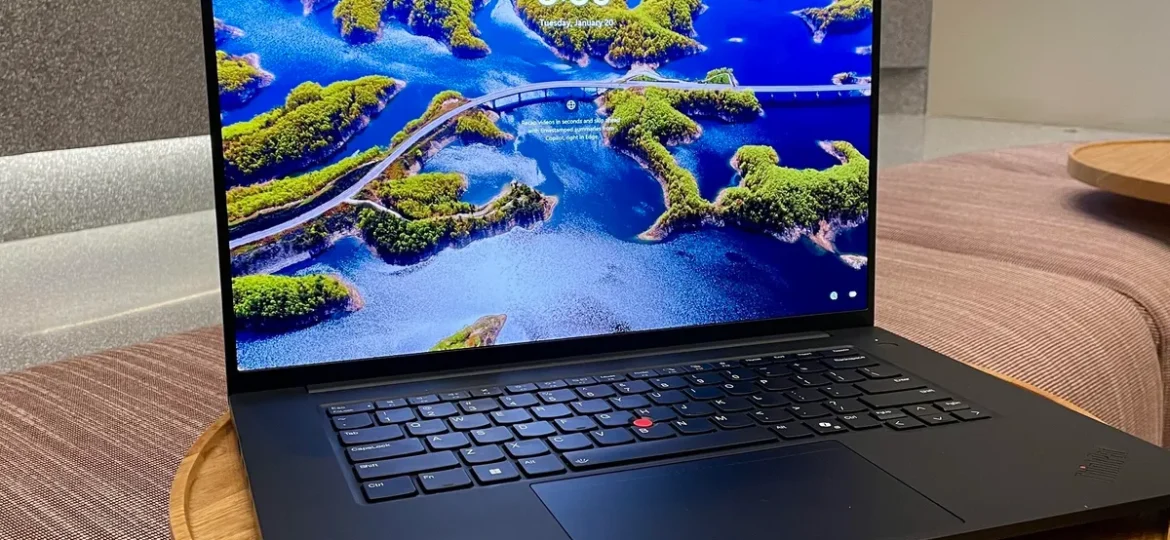
The X1 Carbon Gen 14, unveiled at CES 2026, is the most significant update to that legacy in years. Weighing less than 1kg, the ThinkPad X1 Carbon Gen 14 uses Intel Core Ultra X7 Series 3 processors with up to 50 TOPS NPU and optional 12Xe graphics, providing a platform for sustained workloads in a thin and light design.
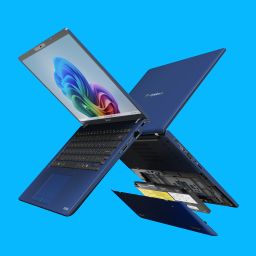
The Gen 14 is built on what Lenovo calls a “Space Frame design“, an approach that places components on both sides of the motherboard, optimising space and improving cooling by up to 20% according to Lenovo. This design supports more efficient repairs and allows room for a minimally larger battery and a larger haptic touchpad. The main deck, including the keyboard and touchpad, is a separate part that can be easily removed, repaired or swapped.
The X1 Carbon Gen 14 features an Intel Arc GPU for editing, multitasking, and video calls. It is crafted for real-world performance, long battery life, enterprise-grade security, and manageability. Three Thunderbolt 4 ports, one on each side, enable convenient, flexible connectivity without extra adaptors. The improved Thermal Design Power handles more demanding loads for improved overall performance.
The innovative form gives IT teams easy access to upgrade and swap components like the keyboard, battery, and sub-board parts, earning this laptop an industry-leading 9/10 iFixit repairability score.
Specification Summary
| Spec | Detail |
| Processor | Intel Core Ultra X7 Series 3 (Panther Lake) |
| NPU Performance | Up to 50 TOPS |
| Weight | Under 1kg |
| Display | 14″ WUXGA IPS or 2.8K OLED, up to 500 nits |
| RAM | Up to 64GB LPDDR5x at 9600MT/s |
| Storage | Up to 1 TB SSD M.2 2280 PCIe Gen4 TLC Opal |
| Ports | 3x Thunderbolt 4, USB-A 3.2, HDMI 2.1 |
Best for: C-suite executives, senior managers, enterprise IT fleets where long-term repairability and TCO matter, and mobile professionals who travel frequently between client locations.
2. Dell Latitude 7450
If the X1 Carbon is the executive’s laptop, the Dell Latitude 7450 is the IT manager’s. Not because it underperforms, but because its design philosophy prioritises what matters most when you are deploying, managing, and supporting hundreds of devices across a distributed workforce.
The Dell Latitude 7450 is a premium business laptop built for modern enterprise needs, combining Intel Core Ultra performance, AI-ready capabilities, enterprise-grade security, and strong battery life. With 32GB RAM, fast SSD storage, and advanced collaboration features, it delivers reliable multitasking for professionals and organisations heading into 2027.
Business laptops in 2026 are no longer evaluated only on performance and portability. The focus has shifted toward AI-enabled productivity, secure remote management, and long-term reliability. Organisations are investing in devices that can support hybrid work environments, remote collaboration, and evolving software ecosystems without frequent upgrades. The Latitude 7450 is designed specifically for this transition.
Dell’s Latitude 7450 Ultralight is part of Dell’s premium business series, targeting professionals who need portable power. The Latitude 7450 goes toe-to-toe with competitors such as the Lenovo ThinkPad X1 Carbon in the premium ultrabook segment, and receives the Editor’s Choice designation for its enterprise-grade security, built-in AI, and battery performance.
Lifecycle planning is a key consideration in 2026. Enterprises are increasingly looking for devices that remain reliable over several years, including not only hardware durability but also software compatibility and security updates. The Latitude 7450 is built with this long-term perspective.
Specification Summary
| Spec | Detail |
| Processor | Intel Core Ultra 5/7 (Series 1/2) |
| Display | 14″ FHD+ IPS or QHD+ touch options |
| RAM | Up to 64GB LPDDR5X |
| Weight | 1.059 kg |
| Storage | Up to 2TB SSD |
| Connectivity | Wi-Fi 7, optional 5G |
| Management | Intel vPro, Dell Optimiser |
Best for: Large enterprise IT departments managing distributed fleets, hybrid workforces, and organisations that prioritise remote device management and long deployment cycles.
3. HP EliteBook X G2i
The EliteBook X G2 Series, named a CES 2026 Innovation Award Honoree, is the first HP business platform to offer AMD, Intel, and Qualcomm processors on the same chassis. This decision shifts the power back to the buyer, letting user needs dictate the processor rather than arbitrary product lines.
The EliteBook X G2i uses Intel Core Ultra Series 3 processors with up to 50 NPU TOPS and up to 180 total platform TOPS. Select models weigh under 1kg and are designed for all-day battery life. Display options include standard WUXGA panels and optional 3K Tandem OLED displays.
All three models in the G2 series share a 14-inch chassis with multiple display options, including a 3K OLED panel with a 120Hz variable refresh rate. Entry-level configurations weigh under 1 kilogram, a remarkable achievement for full-featured business laptops with this level of AI capability.
Security has always been a strength of the EliteBook line, and the G2i advances it. Enterprise features include Windows 11 Pro, Copilot+ AI capabilities, hardware-enforced quantum-resistant security through HP Wolf Security for Business, and optional 5G cellular connectivity. Memory configurations reach up to 64GB LPDDR5X RAM with storage options up to 2TB PCIe.
The serviceability story is equally compelling for enterprise IT teams. HP has redesigned the internal layout, reducing keyboard replacement time by up to 80%, which improves serviceability for IT departments managing large fleets.
For professionals operating across African cities where connectivity can be variable, the optional 5G cellular support means a reliable data connection that does not depend on venue Wi-Fi, a meaningful operational advantage for consultants, government officers, and field professionals.
Specification Summary
| Spec | Detail |
| Processor | IIntel® Core™ Ultra 5 338H (up to 4.7 GHz with Intel® Turbo Boost Technology. |
| NPU Performance | Up to 50 TOPS (G2i) / 85 TOPS (G2q Snapdragon) |
| Weight | Under 1kg |
| Display | 14″ WUXGA or 3K Tandem OLED, 120Hz VRR |
| RAM | Up to 64GB LPDDR5X |
| Security | HP Wolf Security, quantum-resistant encryption |
| Certification | EPEAT 2.0 Gold |
Best for: Mobile-first professionals, executives who travel between multiple locations, and enterprises that prioritise on-device AI capabilities alongside robust security credentials.
4. ASUS ExpertBook P5 G2
The ASUS ExpertBook P5 G2 makes a compelling case that value and enterprise readiness are not mutually exclusive, and the battery life data backs it up.
ASUS announced the ExpertBook P5 G2 at CES 2026, available with up to an Intel Core Ultra 7 Series 3 processor, DDR5 RAM, and support for dual SSDs. Available in 14-inch and 16-inch sizes, the ExpertBook P5 G2 combines advanced connectivity and enterprise-ready security in a sleek, professional form.
Battery performance is where this device earns serious attention. The ASUS ExpertBook P5 broke records in independent testing, lasting 20 hours and 34 minutes on a single charge, the longest battery life tested on any laptop reviewed. For Nigerian enterprise users who operate through power outages, generator cycles, and extended fieldwork, that number is not a specification; it is operational resilience.
The ExpertBook P5 G2 is available with an optional high-capacity battery of up to 70Wh, enabling longer unplugged use. It supports Wi-Fi 7, USB 4 Type-C, HDMI 2.1, and RJ45 LAN for wired network access, flexible external display connections, and everyday peripherals.
Security credentials are enterprise-grade. The device features a physical webcam privacy shield, ASUS ExpertGuardian protection, and five-year NIST SP 800-155-compliant BIOS update support, a warranty on firmware security that most enterprise buyers do not expect at this price point.
The ExpertBook P5 delivers a bright 2.5K 144Hz display, the fastest laptop keyboard independently tested, NIST SP 800 -155-compliant commercial-grade BIOS with five years of
Specification Summary
| Spec | Detail |
| Processor | Intel Core Ultra 7 Series 3 / AMD Ryzen AI options |
| Display | Non-touch screen, 14.0-inch, WQXGA (2560 x 1600) 16:10, Wide view, Anti-glare display, LED Backlit, 400nits, sRGB: 100%, Screen-to-body ratio:84 %Touch screen, 14.0-inch, WUXGA (1920 x 1200) 16:10, Wide view, Anti-glare display, LED Backlit, 400nits, sRGB: 100%, Screen-to-body ratio:84 %
Non-touch screen, 14.0-inch, WUXGA (1920 x 1200) 16:10, Wide view, Anti-glare display, LED Backlit, 300nits, NTSC: 45%, Screen-to-body ratio:84 % |
| Battery Life | Up to 20h 34min (independently tested) |
| Storage | Dual SSD slots |
| Weight | 01.38 kg |
| Security | NIST SP 800-155 BIOS, 5-year security updates |
Best for: Growing SMEs, mid-sized enterprises deploying 50+ units, budget-conscious institutional buyers, and organisations in African markets where battery endurance and price efficiency are primary procurement criteria.
5. Lenovo ThinkPad T14S Gen 6
The ThinkPad T14S Gen 6 at USD 999 gives organisations 90% of the X1 Carbon experience for 30% less cost. Pros include AMD Ryzen AI 300 performance, the ThinkPad keyboard and build quality, an OLED display option at a lower price than the X1 Carbon, and strong battery life exceeding 13 hours. Best for companies deploying 50 or more laptops that need enterprise features without enterprise pricing.
For African resellers building fleet proposals for mid-sized enterprises, the T14s Gen 6 occupies the ideal commercial position: it carries the ThinkPad brand trust that enterprise buyers in Nigeria recognise, the ThinkShield security architecture that IT managers require, and a price point that makes a multi-device proposal achievable rather than aspirational.
Specification Summary
| Spec | Detail |
| Processor | Snapdragon® X Elite with Qualcomm Oryon™ (12 cores) |
| Memory | Up to 64GB LPDDR5x (8533MTs) soldered, dual channel |
| Battery Life | 13+ hours (real-world) |
| Storage | Up to 1TB M.2 PCIe Gen 4×4 SSD, 2240 compatible |
| Display | 14″ WUXGA (1920 x 1200) IPS, low power, 400nit, 100% sRGB, antiglare, TÜV Eyesafe®-certified low blue light |
| Weight | Starting at 1.24kg / 2.72 |
Best for: Mid-sized enterprise fleet deployments, IT managers balancing performance with budget, and resellers building commercial proposals that need to pass the financial director’s scrutiny
Head-to-Head Comparison: 2026 Enterprise Business Laptops
| Model | Best For | Weight | NPU TOPS | Battery |
| Lenovo ThinkPad X1 Carbon Gen 14 | Overall best / executive mobility | Under 1kg | 50 TOPS | All-day |
| Dell Latitude 7450 | Large fleet / IT management | ~1.2kg | Intel vPro | Strong |
| HP EliteBook X G2i | Mobile professionals / AI workloads | Under 1kg | 50–180 TOPS | All-day |
| ASUS ExpertBook P5 G2 | Value fleet/battery endurance | From 1.27kg | 50+ TOPS | 20h+ |
| Lenovo ThinkPad T14s Gen 6 | Mid-market fleet | Starting at 1.24kg | AI 300 series | 13h+ |
What African Enterprise Buyers Should Prioritise in 2026
The global spec sheet is useful context. But procurement decisions in African markets carry considerations that no international review will flag for you.
- Battery life is non-negotiable: In markets where power infrastructure remains a daily variable, a device rated at 8 hours of manufacturer battery life may deliver 5 under real-world conditions. Targeting devices with 13+ hours of independently verified battery performance, the ExpertBook P5 G2’s 20-hour result is the outlier benchmark, providing a meaningful operational buffer across outage cycles.
- AI on-device matters more than AI in the cloud: The most important AI trend for African businesses is not experimentation with standalone tools, but the quiet embedding of AI into everyday business workflows. A business laptop with a dedicated NPU handles these workloads efficiently and securely on-device without the need to send sensitive data to the cloud.
- Serviceability is a total cost argument: Devices that can be repaired, keyboard replaced, battery swapped, SSD upgraded, rather than replaced wholesale, extend the usable lifecycle and reduce the total cost of ownership. The X1 Carbon Gen 14’s 9/10 iFixit score and the EliteBook X G2i’s 80% reduction in keyboard replacement time are not just engineering achievements; they are procurement arguments.
- Authorised sourcing defines warranty validity: The most capable business laptop in this comparison delivers zero warranty value if it arrives through an unauthorised channel. In Nigeria’s technology distribution environment, the distinction between a device sourced through an authorised distributor and one acquired through an unauthorised market is not always visible at purchase, but it becomes very visible when a warranty claim is denied, a battery fails, or an endpoint security tool refuses to register an unverifiable serial number.
Where to Source These Devices in Nigeria
Every laptop compared in this guide is available through TD Africa, Lenovo’s, HP’s, Dell’s, and ASUS’s authorised distributor in Nigeria, backed by nearly three decades of technology distribution across sub-Saharan Africa.
Devices sourced through TD Africa arrive brand new, with serial numbers verifiable on OEM warranty portals, genuine components tested to manufacturer specifications, and access to each brand’s full post-sales support infrastructure. For resellers, that authorised supply relationship is also a commercial advantage: the warranty assurance and product authenticity that convert a single transaction into a long-term customer account.
Frequently Asked Questions (FAQs)
- What is the minimum specification a business laptop should meet in 2026?
The 2026 enterprise baseline is 16GB RAM minimum (32GB recommended), 512GB SSD, Wi-Fi 7, and a dedicated NPU with at least 40–50 TOPS for Copilot+ certification. - Which business laptop offers the best battery life for use in Nigerian conditions? The ASUS ExpertBook P5 G2 leads on independently verified battery life, recording 20 hours and 34 minutes in single-charge testing, the longest of any model in this comparison.
- Is the ThinkPad X1 Carbon Gen 14 worth the premium over the T14S Gen 6? For executives and highly mobile professionals, yes. The X1 Carbon Gen 14 delivers superior portability at under 1kg, the Space Frame repairability design, and a premium OLED display option that the T14S does not match at its price point. For fleet deployments of 50+ devices where cost per unit matters, the T14S Gen 6 delivers 90% of that experience at approximately 30% less cost.
- Why does the HP EliteBook X G2i offer three different processor options? HP’s decision to offer AMD, Intel, and Qualcomm processor options on the same G2 chassis reflects the reality that enterprise IT teams have different ecosystem requirements. Intel vPro buyers get the G2i, AMD performance buyers get the G2a, and ARM-native workflow teams get the G2q.