Key Takeaways:
- Winning bulk Lenovo laptop tenders requires understanding the client’s operational needs, downtime risks, and budget priorities rather than simply competing on price or specifications.
- Lenovo’s ThinkBook and ThinkPad lines serve different business needs: ThinkBook suits budget-conscious SMEs and everyday professional use, while ThinkPad supports organisations with higher security, durability, and uptime requirements.
- Lenovo enters 2026 as the world’s largest PC vendor by shipment share, even as the broader market contracts, giving resellers a stronger credibility argument to lead a tender.
- Resellers can build stronger bulk proposals by offering mixed-tier laptop configurations, aligning warranty and support options with user needs, and sourcing genuine Lenovo products through authorised distributors like TD Africa.
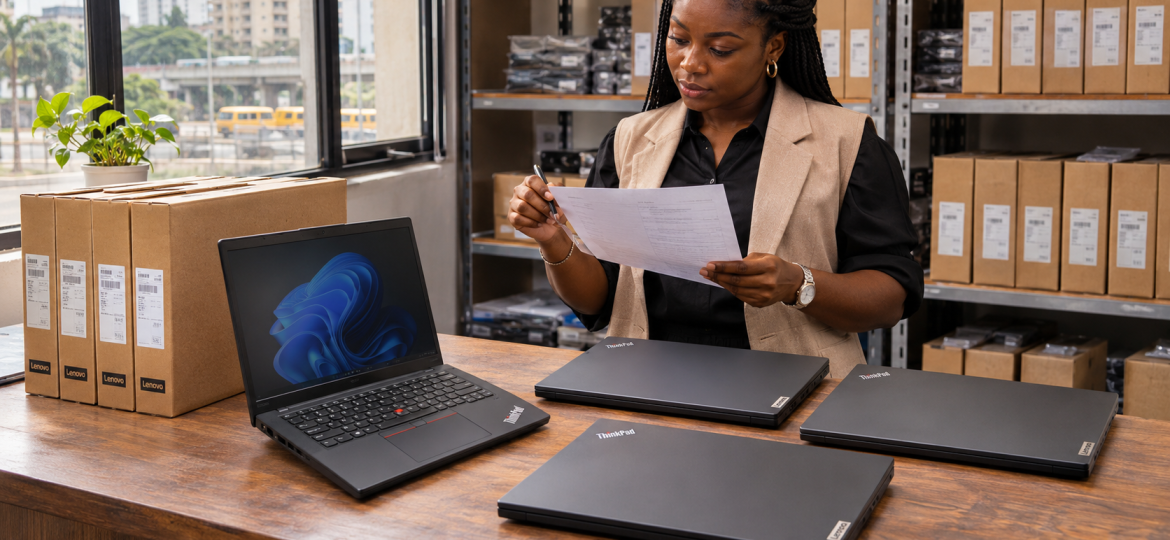
An order for 160 laptops can appear to be a single procurement process, but the people who will use those devices have very different responsibilities and expectations. For resellers, understanding those differences is what turns a routine quotation into a well-considered procurement proposal.
The strongest proposal will not simply compete on unit price or list available specifications. It will show that the reseller understands the institution’s needs and can recommend the right Lenovo devices for each category of user, helping the organisation avoid costly mismatches after deployment.
WHY WHICH LENOVO LAPTOP TO BUY IS THE WRONG FIRST QUESTION
As a reseller, a strategic way to start a bulk procurement conversation is to understand how much a business operation can be disrupted when a laptop fails before discussing their preferred processor or RAM configuration.
A laptop failure carries different consequences depending on who is using the device. A delay in replacing an administrative assistant’s laptop may slow down routine office tasks, but a similar disruption for a finance team during financial close or an executive handling critical business engagements could affect deadlines and decision-making. This is why understanding a buyer’s tolerance for downtime matters. It helps you determine whether a deployment prioritises everyday affordability or greater reliability, security and support, making it a more meaningful basis for recommending between Lenovo’s ThinkBook and ThinkPad ranges than price alone.
Recommended Read: Lenovo Laptops in Nigeria: ThinkBook, IdeaPad, Yoga, and Legion Buyer’s Guide (2026)
WHAT LENOVO BRINGS TO THIS SPECIFIC CONVERSATION
Lenovo keeps its commercial range deliberately separate from its consumer IdeaPad and gaming Legion lines, and within that commercial range, the split between ThinkBook and ThinkPad follows the same risk logic as other brands’ entry-and-premium tiers, even though Lenovo frames it as a design and positioning choice rather than a strict budget tier.
- The ThinkBook line is built for small and medium-sized businesses and budget-conscious professional use. Configurations typically run from Intel Core i5 through i7, with 16GB to 32GB of RAM and up to 1TB of SSD storage depending on model, housed in an aluminium-topped chassis with a more modern, business-casual look. ThinkBook ships with standard commercial security features. The standard warranty on most ThinkBook models is one year, with extended cover available as an add-on rather than bundled in as standard.
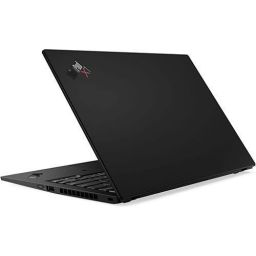
- The ThinkPad line is Lenovo’s flagship business range, built around decades of reputation for surviving demanding daily use. ThinkPad models typically carry Intel Core i5 through i7 with vPro options for remote management, and a magnesium-reinforced chassis tested against MIL-STD-810H standards for shock, dust, temperature extremes, and humidity. ThinkPad also carries Lenovo’s ThinkShield security suite, with stronger biometric and firmware-level protections than ThinkBook offers. The defining difference for a bulk buyer is that ThinkPad models commonly ship with a three-year warranty, often with on-site service options, well beyond ThinkBook’s standard one-year coverage, which matters for institutions planning a laptop’s working life across multiple budget cycles rather than replacing it after year one.
LENOVO’S MARKET POSITION GIVES THIS TENDER EXTRA WEIGHT
The global PC market contracted sharply this year, with shipment volumes down roughly a fifth year over year across the industry, and Lenovo’s own shipments fell by a similar margin. Even so, Lenovo held on to the largest global market share of any PC vendor, ahead of HP and Dell, both of whom posted comparable declines. In other words, the whole market is buying fewer PCs, but Lenovo is still the one buyers are choosing most often when they do.
A procurement officer deciding which brand to commit an institution’s budget to for the next three to five years may find reassurance in scale. A vendor that retains its position as the global market leader despite a downturn signals a level of resilience that could translate into greater confidence in parts availability, firmware support, and long-term resale value. This is a useful credibility point to establish early, particularly when compared with smaller vendors facing the same market pressures with fewer resources.
However, market leadership is only part of the decision. Warranty coverage, after-sales support, and the broader risk considerations still need to be addressed.
BEYOND THE PRICE: WHAT MAKES A LENOVO BULK QUOTE PROCUREMENT-READY
- Security requirements tied to the data the devices will actually hold:
A device portfolio handling payroll, citizen records, or confidential government data benefits from ThinkPad’s stronger ThinkShield security stack and vPro-based remote management. - Mixed-tier fleets for teams with varying needs:
A single institutional buyer, a ministry, a bank, a university, rarely has one uniform user group. Travelling directors and finance officers handling sensitive records are often better matched to ThinkPad, while general administrative seats are well served by ThinkBook. Recognising that split early lets a reseller quote accurately in one proposal instead of renegotiating scope after deployment. - Spare units and accessory stock matched to the warranty tier chosen.
A ThinkBook fleet on standard one-year warranty needs a larger buffer of spare units, since a unit sent for repair can be unavailable for a week or more depending on service terms. A ThinkPad fleet on a three-year, on-site-eligible warranty needs a smaller buffer, since downtime per incident is typically shorter and better supported. Pricing the right number of spares into the tender is part of matching the quote to the warranty tier, not an afterthought once the laptops are already deployed.
WHY THIS MATTERS FOR STOCKING
ThinkBook and ThinkPad serve different customer needs and procurement priorities. A reseller focused only on ThinkBook is well positioned to serve SMEs and budget-conscious deployments but risks missing higher-value institutional tenders from banks, ministries and corporate headquarters, where warranty coverage, long-term support and operational reliability carry greater weight. On the other hand, a reseller who stocks only ThinkPad may price themselves out of volume-driven SME and education tenders, where affordability is often a key consideration.
The opportunity is to offer both. A balanced Lenovo portfolio allows resellers to serve customers across different budgets, workloads, and risk requirements, rather than losing opportunities because their product range is too narrow.
WHY THIS CHANGES HOW RESELLERS SHOULD PITCH A LAPTOP ORDER
As a reseller handling enquiries from both SMEs and large institutions, using the same generic pitch about processor speed and RAM for every buyer can undermine your credibility. Different buyers have different priorities, and your conversation should reflect that.
A procurement officer sourcing laptops for a ministry’s finance department is more likely to prioritise on-site warranty response times, data security features such as ThinkShield, and long-term operational reliability than benchmark scores. An administrator procuring 160 laptops for a general office, on the other hand, may be more concerned about unit pricing, bulk discounts, and the overall cost of deployment.
The difference is knowing what matters to each buyer before making your recommendation. When you lead with the wrong priorities, you risk showing that you understand the specifications but haven’t considered the business needs behind the purchase.
TD Africa‘s distribution of Lenovo’s commercial range exists to give resellers exactly this kind of configuration flexibility: ThinkBook and ThinkPad units stocked side by side, warranty and support terms confirmed upfront for each tier, and the ability to quote a mixed-tier fleet in one proposal rather than discovering the mismatch after deployment.
CONCLUSION
A ThinkBook and a ThinkPad may appear on the same distributor price list, but they address different institutional priorities. For a buyer equipping a general office, the primary concern is how far the budget can stretch across every workstation without compromising essential business needs. For a finance department, the conversation shifts to reliability, security and support: what happens when a device fails, how quickly can it be serviced, and how can we avoid any business disruption.
Sourcing through an authorised distributor like TD Africa changes what a reseller can confidently promise in a tender. Every unit comes with Lenovo’s manufacturer warranty intact, support tiers that are what they’re sold as, and stock that’s genuine down to the serial number, so a bid built on a three-year ThinkPad warranty or ThinkBook pricing isn’t a promise the reseller is hoping holds up later. It’s one backed by the distributor standing behind it, and backed by a brand that has held the largest share of the global PC market through one of its most difficult years. For a reseller trying to win both ends of the market, the SME tender and the institutional one, that combination of backing and brand weight is as much a part of the pitch as the laptop itself.
FAQS
- What’s the real difference between Lenovo ThinkBook and ThinkPad for a bulk order?
The clearest difference for a bulk buyer is warranty length and build durability. ThinkBook typically carries a one-year standard warranty with extended cover available as an add-on. ThinkPad commonly ships with a three-year warranty, often with on-site service options, alongside a more rugged, military-standard-tested build and stronger ThinkShield security features. - Should every bulk order use the same Lenovo tier across all units?
Not necessarily. Institutional buyers with mixed-risk teams, such as travelling directors or finance staff alongside general administrative staff, often benefit from mixing ThinkBook and ThinkPad units within the same order, matching each tier to how critical that role’s laptop uptime actually is. - Does Lenovo’s market position actually matter for a bulk tender, or is it just brand reputation?
It’s a genuine practical consideration, not just reputation. Lenovo remained the world’s largest PC vendor by shipment share even through a sharp industry-wide contraction in 2026, which signals stronger long-term parts availability, firmware support, and service network continuity, factors that matter over a laptop fleet’s multi-year working life, not just at the point of purchase. - How can resellers source genuine Lenovo laptops for a bulk order?
Through TD Africa, an authorised Lenovo distributor. Devices are sourced through official channels, ensuring genuine hardware backed by Lenovo’s manufacturer warranty and structured after-sales support appropriate for institutional deployments.